
Insights
Complete Guide to Custom Closets in Georgetown, TX
Published September 16, 2025
Quick Summary
- Who this is for: Georgetown homeowners (including many in Sun City) who want closets that are easy to use daily and stay organized with less bending/reaching.
- Outcome: A “comfort-first” layout with drawers, pull-outs, and a clear daily zone that keeps routines smooth.
- Cost/Timeline: Most projects land in $2,500–$35,000+; many installs take 1–3 days after design + fabrication.
How much do custom closets cost in Georgetown, TX?
In Georgetown, most custom closet projects cost $2,500–$6,000 for reach-ins, $6,000–$16,000 for walk-ins, and $15,000–$35,000+ for boutique dressing rooms. Pricing is driven by finish tier, hardware quality, and accessories like pull-outs and lighting—plus whether you bundle multiple rooms into one scope.
| Scope | Typical Range | Notes |
|---|---|---|
| Reach-in refresh | $2,500 – $6,000 | High ROI for bedrooms and hall closets. |
| Walk-in upgrade | $6,000 – $16,000 | Layout + accessories drive cost. |
| Boutique dressing room | $15,000 – $35,000+ | Lighting, doors, and premium finishes add scope. |
| Pantry + utility storage | $3,500 – $9,000 | Pull-outs and deep shelving are common upgrades. |
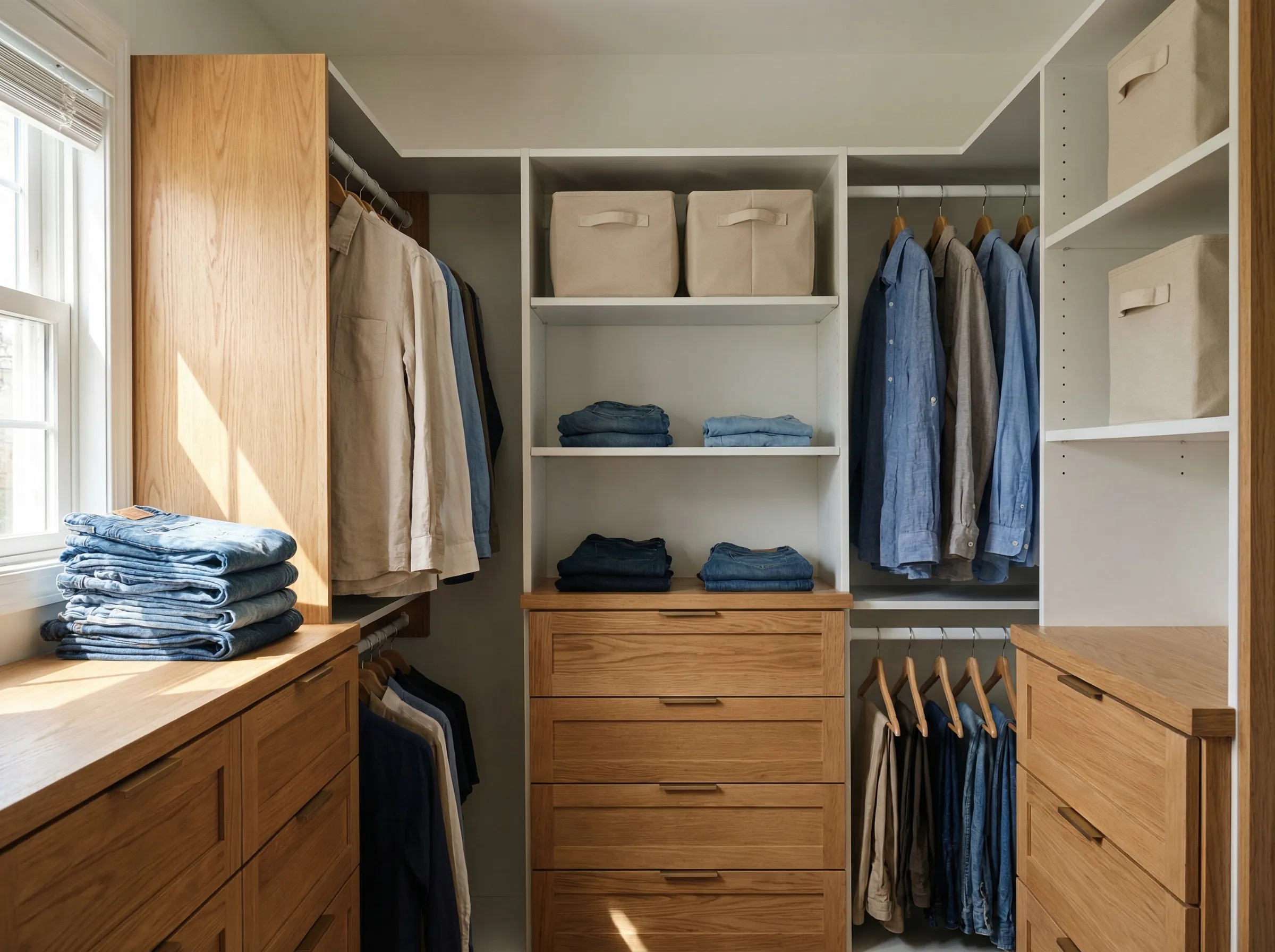
Serving Georgetown? See our Georgetown service area.
For scope references: Closet & Interior Installations and Custom Closets.
Georgetown priorities: low-friction routines and long-term ease
The best “future-proof” closets emphasize:
- Easy access (less bending and awkward reaching)
- Clear categories and zones (so things stay put)
- Durable hardware (so drawers don’t become a daily annoyance)
Accessibility-minded closet design (without making it look “medical”)
Small choices make a big difference:
- Place daily items at comfortable height (mid-zone)
- Use pull-out shelves or drawers instead of deep fixed shelves
- Add a seated bench or landing zone in walk-ins
- Prioritize clear walking routes and good lighting
Closet features that help long-term comfort
- Pull-out drawers for frequently used items (less bending and digging)
- Lowered “daily zone” sections for easy reach
- Lighting that makes it easy to distinguish colors and labels
- Simple, consistent categories (fewer micro-zones means easier upkeep)
A realistic timeline (so you can plan smoothly)
| Phase | What happens | Typical timeline |
|---|---|---|
| Discovery + measure | Routine walkthrough + precise measurements. | 30–90 minutes |
| Design + quote | Layout options + tiers + accessories. | 2–10 business days |
| Fabrication | Materials cut/finished; hardware ordered. | 2–6 weeks |
| Install | Most single-room installs are quick. | 1–3 days |
What to do before your design appointment (helps with clarity and pricing)
- Take photos of each closet (wide shot + corners + door swing)
- Identify daily items that should be easiest to access (the “daily zone”)
- Note any mobility or comfort considerations (bending, reaching, lighting needs)
- Decide if you want built-in hampers, pull-outs, or a seated bench
Walk-in closets in Georgetown: the “easy morning” layout
If you want the closet to stay organized, design around flow:
- Separate zones (even in solo closets) so categories don’t mix
- A landing shelf or countertop for everyday items
- Shoe storage that’s visible and easy to access
Materials and indoor air quality
If you want healthier materials or lower odor:
- Ask about NAF/ULEF and low-VOC finishes
- Ask what’s used for panel cores and adhesives
- Choose durable hardware to avoid replacements and waste
Reference: EPA formaldehyde guidance
Materials + hardware tiers (what makes a closet feel premium)
| Category | Good | Better | Best | | --- | --- | --- | | Drawer slides | Standard | Full-extension | Full-extension + higher load rating | | Hinges | Standard | Soft-close | Soft-close + heavier-duty | | Lighting | None/basic | Puck lights | Integrated LEDs + warm tone |
Accessory costs (what commonly changes the quote)
Accessories can add a lot of everyday ease:
| Add-on | Why it matters |
|---|---|
| Pull-out shelves/drawers | Reduces bending and “digging” in deep shelves. |
| Integrated lighting | Improves visibility and reduces frustration. |
| Pull-out hampers | Reduces laundry pile behavior. |
| Shoe walls / angled racks | Keeps shoes visible and off the floor. |
Storage beyond the closet (what keeps the whole home calmer)
Many Georgetown homeowners benefit from pairing closets with kitchen/utility organization:
- Pantry pull-outs for heavy items
- Garage cabinets for “bulk storage” that otherwise spills inside
Learn more: Garage & Pantry Organization
Starter packages (clear scopes for clear quotes)
| Package | What’s included | Best for |
|---|---|---|
| Reach-In Refresh | Shelves + drawers + double-hang | Fast ROI in bedrooms. |
| Walk-In Ease Upgrade | Zoned hanging + lighting + pull-outs | Comfort and daily ease. |
| Whole-Home Storage Bundle | Closets + pantry/garage systems | Low-friction lifestyle setup. |
Quote checklist (Georgetown edition)
- Are material tiers and hardware levels clearly defined?
- Is demo/haul-off included and itemized?
- Is lighting specified (integrated vs puck, warm vs cool)?
- Are accessories itemized (shoes, jewelry, hampers, pull-outs)?
- Does the design reduce bending/reaching for daily items?
Common mistakes to avoid (Georgetown edition)
- Overbuilding fixed shelves instead of drawers and pull-outs
- Designing for aesthetics only (daily access matters more)
- Underestimating lighting (poor lighting makes closets feel cluttered)
- Not itemizing accessories (hard to compare quotes without it)
Quick FAQ
What matters most for aging-in-place?
Put daily items in the mid zone, use drawers/pull-outs instead of deep fixed shelves, and prioritize lighting and clear walking routes.
Do drawers really matter that much?
Yes. Drawers reduce visual clutter and keep small items from becoming piles.
What’s the easiest upgrade for comfort and safety?
Good lighting and a clearly defined “daily zone” at comfortable height. Those two upgrades reduce bending, reaching, and frustration immediately.
If you’re trying to reduce bending and “digging,” start by comparing layouts on the Custom Closets page, then bring those zone ideas into your installer conversation.
Start your Georgetown project
If you want custom closets that prioritize everyday ease and long-term comfort, we can connect you with vetted designers and installers serving Georgetown.
Ready for next steps?
Tell us what you’re planning and we’ll match you with vetted local pros who can quote the work and explain the tradeoffs for your property.