

Quick Summary
- Who this is for: Austin homeowners planning a patio, retaining wall, or outdoor kitchen who want a build that stays level and drains correctly.
- Outcome: A drainage-and-base checklist, material guidance, and real local budget ranges.
- Cost/Timeline: Many projects start in $8,000–$15,000; multi-zone builds often land in $25,000–$75,000+, with timelines driven by drainage scope and trade coordination.
How much does hardscaping cost in Austin, TX?
In Austin, most hardscaping projects cost $8,000–$15,000 for a small patio or walkway and $25,000–$75,000+ for multi-zone backyards (patio + drainage + steps/walls + lighting). For paver patios, plan $15–$35/sq ft including excavation, base, edge restraint, and drainage. Clay movement and access drive price.
If you want local context on neighborhoods and service coverage, start here: Austin service area.
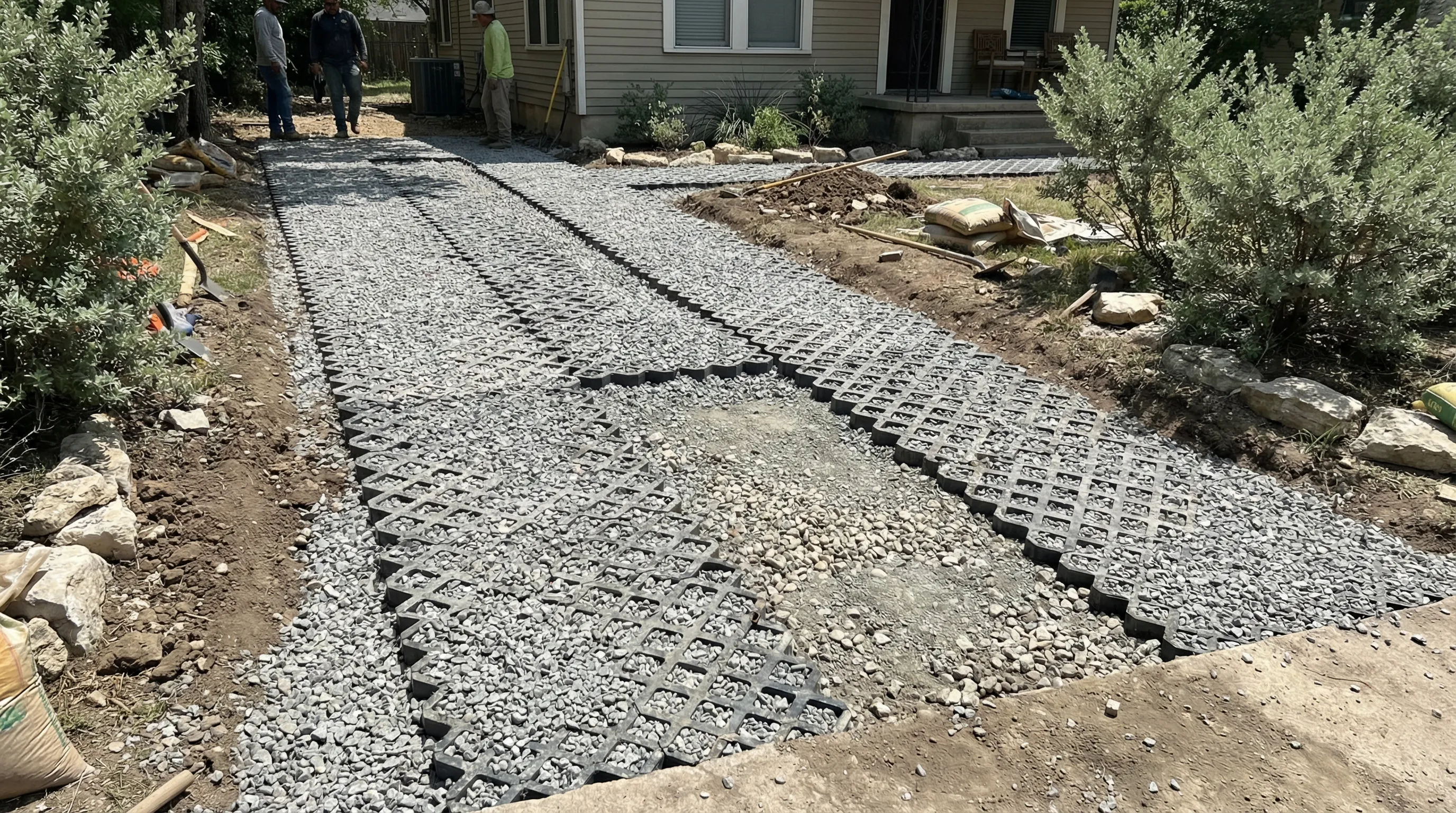
Hardscaping in Hill Country: Function First
In Austin, a patio isn’t just a place to sit; it’s a technical challenge. Between our expansive clay soils (hello, shifting foundations!) and sudden flash floods, hardscaping must be engineered, not just laid.
If you want a deeper overview of what hardscaping pros actually handle, start with our Hardscaping & Outdoor Living service page and then use this guide to pressure-test proposals you receive.
The most successful projects we see in Central Texas prioritize drainage and base preparation above all else. If you skip the engineering, your beautiful limestone patio might be cracking within two years.
Key Considerations for Austin Yards
1. Drainage is King
Before a single stone is laid, we look at water flow. French drains, swales, and proper grading are essential. Permeable pavers are becoming a top choice in Austin, especially for properties nearing their impervious cover limits, as they allow water to soak directly into the ground.
For a deeper dive into why drainage matters, the City of Austin’s stormwater guidance explains how runoff, impervious cover, and erosion interact on hilly lots.
Drainage red flags (these usually mean “fix water first”)
If you see any of these, you should expect some portion of the budget to go toward grading and runoff control before aesthetics:
- Water pooling near slab edges, patio doors, or downspouts
- Pavers that keep settling or “pumping” after heavy rains
- Erosion channels or mulch washouts after storms
- A low spot where the yard becomes a temporary creek
2. Material Choices: Heat & Durability
- Native Limestone: The classic Austin look. It stays relatively cool but can be porous and stain if not sealed.
- Luestone / Sandstone: Offers richer colors but absorbs more heat.
- Concrete Pavers: Engineered for durability and come in endless styles. Look for “cool-touch” technology for pool decks.
- Decomposed Granite: A budget-friendly favorite for casual paths and fire pit areas, though it requires periodic topping up.
Heat-resilient hardscapes (the “August test”)
Austin summers punish dark, dense surfaces. If the space will be used barefoot (pool decks, lounging areas), ask about:
- Lighter stone or “cool” pavers for lower surface temperatures
- Shade-first design (tree placement, pergolas, or shade sails)
- Non-slip textures for steps and wet transitions
3. Retaining Walls
Whether you’re on a flat lot in Round Rock or a cliffside in Bee Cave, retaining walls are often necessary to create usable flat space. Walls over 4 feet typically require engineering in Austin.
If your property is in the western suburbs, you may also want to read our Bee Cave hardscaping guide for more hill-country specific retaining wall examples.
If you want deeper scope details by category, these pages break down typical approaches and costs:
Cost of Hardscaping in Austin
Budgets depend on access (can we get a bobcat in?) and material choice.
| Project Scope | Estimated Cost | Notes |
|---|---|---|
| Basic Paver Patio (400 sq ft) | $12,000 – $18,000 | Includes excavation, base, and standard pavers. |
| Retaining Wall (Stone) | $80 – $150 per sq ft face | varies by height and access. |
| Outdoor Kitchen Base | $8,000 – $15,000 | Masonry structure only; appliances extra. |
| Permeable Paver System (patio/drive extension) | $18 – $35 per sq ft | Deeper base layers; helps with puddling/runoff in the right conditions. |
| Hardscape Maintenance / Reset | $500 – $3,500 | Cleaning, re-sanding, sealing, spot resets for settled areas. |
What makes Austin hardscaping “more expensive than it looks on Instagram”
- Base depth and compaction: The base is the project. It’s what keeps pavers level on expansive soils.
- Drainage integration: Tying downspouts, swales, and drains into one plan prevents “we built a patio and created a lake.”
- Access constraints: Narrow side yards, stairs, or steep lots increase labor and hauling.
- Utility coordination: Gas/electric for outdoor kitchens can add real cost and timeline.
If you want an approachable explainer on permeable systems, the U.S. EPA permeable pavement overview is a solid reference when you’re comparing options.
Maximizing ROI
To get the most value, think in “rooms.” A fire pit area coupled with a dining patio creates two distinct zones for entertaining. And don’t forget lighting—low-voltage LEDs extend the usability of your investment well into the evening.
Many homeowners pair a new patio with sustainable landscaping so plantings, irrigation, and hardscape all work together instead of feeling bolted on later.
Bid comparison checklist (Austin edition)
Use this list to keep conversations grounded in longevity, not just looks:
- What is the excavation depth and base material spec (not “we’ll build a base”)?
- How do they handle edge restraint and transitions so pavers don’t creep?
- Where does water go in a heavy rain—do they show you drainage paths?
- If there are steps: are riser heights consistent and landings sized for comfort?
- What’s the maintenance plan (polymeric sand refresh, sealing schedule, spot resets)?
A smart way to start small (and still “feel done”)
If you’re not ready for a full backyard rebuild, start with one high-impact zone:
- Entry path + landing (clean transitions, lighting, curb appeal)
- Dining patio + shade plan (the space you’ll actually use weekly)
- Drainage + a small seating terrace (fix the water problem while gaining usable space)
Then layer in planting and irrigation around it using our 2025 xeriscaping cost guide as a budgeting companion.
Start Your Project
Ensure your hardscaping is built to last through Texas heat and storms.
If you are comparing quotes, keep this guide open alongside our 2025 xeriscaping cost guide so you can see how hardscape and planting budgets typically interact.
Ready for next steps?
Tell us what you’re planning and we’ll match you with vetted local pros who can quote the work and explain the tradeoffs for your property.