
Insights
Complete Guide to Sustainable Landscaping in Cedar Park, TX
Published September 2, 2025
Quick Summary
- Who this is for: Cedar Park homeowners who want a low-water yard that still looks tidy under HOA expectations.
- Outcome: A phased plan (structure + irrigation + repeatable plant palette) that holds up to Texas heat and fast storms.
- Cost/Timeline: Most projects land in $3,500–$35,000+; many installs run 1–3 weeks depending on scope and crew availability.
How much does sustainable landscaping cost in Cedar Park, TX?
In Cedar Park, sustainable landscaping typically costs $3,500–$12,000 for a focused bed refresh, $8,000–$18,000 for a structured partial lawn replacement, and $15,000–$35,000+ for a full lawn-to-xeriscape conversion. Budgets increase with drainage corrections, irrigation retrofits, and paths/edging that make the yard look intentionally designed.
| Scope | Typical Range | Notes |
|---|---|---|
| Native bed refresh + drip tweaks | $3,500 – $12,000 | Great for front beds, side yards, and “problem corners.” |
| Partial lawn replacement (structured, HOA-friendly) | $8,000 – $18,000 | Paths + edging + grouped plantings drive the “finished” look. |
| Full lawn-to-xeriscape conversion | $15,000 – $35,000+ | Includes demo, soil work, drip irrigation, mulch/rock, and structure. |
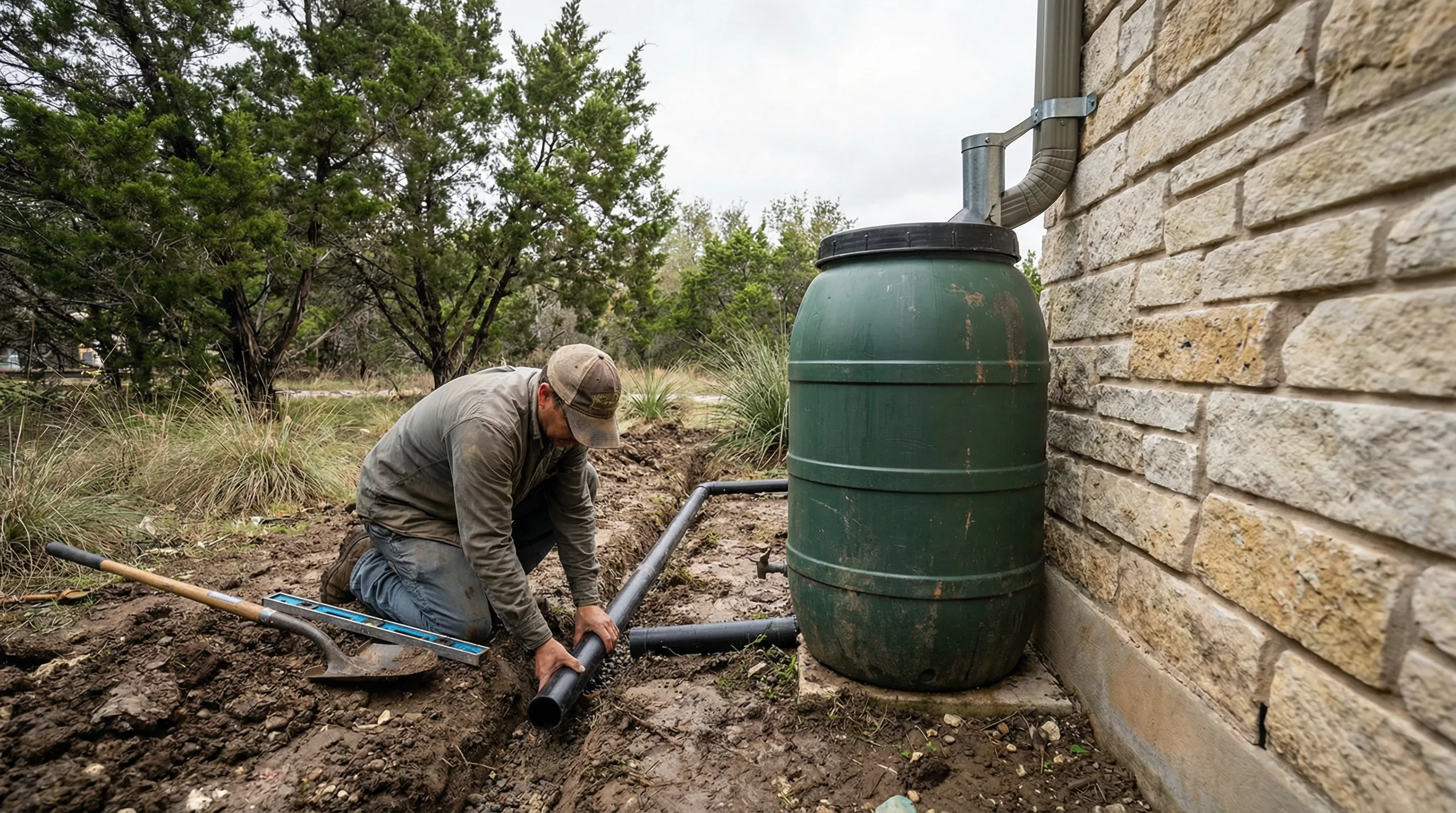
For a deeper line-item cost breakdown (and a quote checklist), keep our 2025 xeriscaping cost guide open while you plan.
Serving Cedar Park? See our Cedar Park service area.
Cedar Park sustainable landscaping: what actually works here
Cedar Park homeowners often want the same outcomes: less watering, less mowing, and a yard that still looks polished. The trick is building in structure so “native” doesn’t read as “weeds.”
If you want the high-level scope of what pros handle, start with our Landscaping services overview and then use this guide to pick the right project path.
Cedar Park site realities (what drives success)
Most Cedar Park sustainable projects succeed when they respect three realities:
- Heat is the baseline. Plants must handle long hot stretches, not just “average summers.”
- Storms arrive fast. Heavy rain after dry weeks exposes weak grading and poorly edged beds.
- HOA presentation matters. The yard still needs to look intentional from the street.
If your yard has recurring puddles, mulch washouts, or water pooling near the slab, treat that as a design input. A yard can be native and still fail if runoff has nowhere to go.
The HOA-friendly “no-mow” front yard (without the rock-yard vibe)
The best HOA-friendly sustainable yards have three visible signals: edges, paths, and repetition.
What makes it look designed
- Defined edges: steel edging or stone borders so beds read as intentional
- Clear circulation: a decomposed granite or paver path from driveway/sidewalk to entry
- Repeat plants in drifts: fewer species, repeated in groups, looks curated
- One focal element: a small tree, a boulder cluster, or an architectural plant
If you want to validate plant choices and water needs, the Texas A&M AgriLife Extension is one of the most reliable Central Texas references.
Heat and water: the two real design constraints
Shade-first comfort
If you care about enjoying the yard, shade is your best “sustainable upgrade.” A shaded patio feels drastically cooler, which changes how often you actually use the space.
Irrigation that doesn’t waste water
For planting beds, drip is usually the move. If your system is older or inconsistent, prioritize an irrigation upgrade first:
- Add/repair pressure regulation (prevents misting and runoff)
- Convert beds from spray to drip
- Split zones by sun exposure (full sun vs shade)
Learn more: Irrigation Installation & Repair
Planting strategy for Cedar Park (simple, durable, repeatable)
Instead of “a little of everything,” use a repeatable palette:
- Structure plants: a few tough shrubs used repeatedly for shape
- Color plants: perennials that bloom in waves
- Ground layer: mulch/rock + low groundcovers that suppress weeds
For native plant research and bloom timing, the Lady Bird Johnson Wildflower Center plant database is a strong local trust anchor.
A practical “starter palette” by sun exposure
You don’t need 30 plant species to win. You need a repeatable set that stays tidy:
Full sun beds
- 1–2 repeat shrubs for structure (used in groups)
- 2–3 flowering perennials for staggered color
- 1 architectural accent used sparingly (a few focal points, not everywhere)
Part shade / under trees
- Shade-tolerant natives and groundcovers
- Mulch-first establishment (shade beds can stay damp longer)
Ask any designer to explain why each plant is on the plan (water needs, mature size, and winter appearance). If the answer is “it’s popular,” the plan is too thin.
Starter projects (easy ways to start small and still feel progress)
Competitors often push full-yard transformations. Cedar Park homeowners can win by phasing the yard into zones:
| Starter project | Typical Range | Best for |
|---|---|---|
| Entry bed refresh (structure + repeats) | $3,500 – $9,000 | Curb appeal without redoing the whole yard. |
| Side-yard “shade garden” | $4,000 – $10,000 | Turning a forgotten side yard into a low-effort win. |
| Partial lawn replacement (front) | $8,000 – $18,000 | HOA-friendly “no-mow” that still looks tidy. |
| Irrigation + bed retrofit | $1,500 – $5,500 | Fix waste and plant loss before expanding scope. |
“Low maintenance” expectations (what you actually do each season)
Sustainable landscapes trade weekly mowing for lighter seasonal care:
- Spring: prune, refresh mulch, adjust drip emitters, top-dress compost as needed
- Summer: deep water cycles (less often), spot-weed after storms, check for irrigation clogs
- Fall: cut back perennials after blooms, refresh mulch, plant cool-season natives
- Winter: freeze protection for young plants; cleanup pass before spring growth
If wildlife habitat is part of your goal, certification checklists are useful guardrails:
What to ask in a quote (so “low maintenance” is real)
- Do they define zones by square footage (front beds, side yard, back beds)?
- Are plant sizes specified (1-gallon vs 5-gallon vs 15-gallon)?
- Is irrigation described as drip zones + controller settings, or just “irrigation included”?
- What is the weed strategy (mulch depth, edging, maintenance expectations)?
- Do they include an establishment plan (first-season watering and pruning)?
Common mistakes to avoid (Cedar Park edition)
- Buying “pretty plants” before solving water flow. Drainage mistakes kill landscapes faster than drought.
- Too many plant varieties. A handful of repeats looks designed; a “sample platter” looks messy.
- No edging. Edging is what makes a native yard read as intentional and HOA-friendly.
- Assuming drip means “no watering.” Establishment watering is still required; drip just reduces waste.
If you want a full-site plan (not just “add plants”), start with Sustainable Landscape Design. If you’re explicitly replacing turf, Xeriscaping & Drought-Resistant Design is usually the right scope anchor.
Start your Cedar Park plan
If you want help scoping the right first phase (and comparing bids), we can connect you with pros who build sustainable landscapes that look intentional, not improvised.
Ready for next steps?
Tell us what you’re planning and we’ll match you with vetted local pros who can quote the work and explain the tradeoffs for your property.