
Insights
Complete Guide to Sustainable Landscaping in Dripping Springs, TX
Published September 4, 2025
Quick Summary
- Who this is for: Dripping Springs homeowners dealing with caliche/rock, deer pressure, slope runoff, and dark-sky expectations.
- Outcome: A site-first plan (erosion + irrigation + repeatable plant palette) that survives Hill Country conditions and still looks polished.
- Cost/Timeline: Many projects fall in $4,000–$45,000+; timelines vary by slope/access and whether hardscape/drainage is included.
How much does sustainable landscaping cost in Dripping Springs, TX?
In Dripping Springs, sustainable landscaping typically costs $4,000–$12,000 for a deer-resistant refresh, $10,000–$22,000 for a structured partial conversion, and $18,000–$45,000+ for a full-property plan. Budgets rise when you need slope erosion control, berms for rocky soils, and irrigation zoning that prevents runoff.
| Scope | Typical Range | Notes |
|---|---|---|
| Deer-resistant planting refresh + drip upgrade | $4,000 – $12,000 | Best “start small” path for Hill Country lots. |
| Partial lawn-to-native conversion (structured) | $10,000 – $22,000 | Edging + paths + grouped plantings keep it tidy. |
| Full property conversion + soil work | $18,000 – $45,000+ | Demo, soil/berms, irrigation zones, and structure. |
Use our 2025 xeriscaping cost guide to compare quotes line-by-line.
Serving Dripping Springs? See our Dripping Springs service area.
Dripping Springs priorities: survive the site, then make it beautiful
In Dripping Springs, sustainable landscaping isn’t just about saving water. It’s about building a yard that survives:
- Rocky / caliche soil that limits root depth
- Storm runoff that can cut channels on sloped sites
- Deer browsing that wipes out “pretty” plants
Start with the service-level overview: Landscaping. Then use this guide to choose the right first phase.
The deer factor (and how to design around it)
Plant choice matters, but layout matters just as much:
- Protect new installs for the first 4–8 weeks (temporary cages/netting)
- Use aromatic/textured plants at bed edges as “buffers”
- Don’t place the tastiest plants along a known deer path
For deer-resistant plant research, the Lady Bird Johnson Wildflower Center plant database is a dependable reference.
Soil strategy for rocky lots (what works on caliche)
Instead of trying to excavate deep, many Hill Country plans succeed with:
- Berms/raised beds to create root depth without fighting rock
- Compost + mineral-forward soil mixes for structure
- Mulch for establishment, then rock/mulch blends as plants mature
For Central Texas plant and watering guidance, the Texas A&M AgriLife Extension is a strong trust anchor.
Water strategy for larger lots (without shocking the water bill)
Dripping Springs properties can be larger than in-town lots, so efficiency matters:
- Drip for beds (zone by sun exposure)
- Keep turf footprints small (use it where you actually play or walk)
- Use smart controllers to avoid watering right before storms
Learn more: Irrigation Installation & Repair
Dark-sky-friendly landscaping (light where you need it, not everywhere)
A practical “dark-sky” approach is less about brightness and more about intent:
- Low-glare, warm lighting along steps and transitions
- Shielded fixtures to avoid spill into the night sky
- Fewer lights placed better (instead of lots of bright fixtures)
Slope + runoff: treat drainage as part of the design
On Hill Country lots, the water plan is the landscape plan. Sustainable designs that hold up long-term often include one or more “functional aesthetics”:
- Dry creek beds to move runoff safely through the yard
- Rock aprons where downspouts hit the ground (prevents trenching)
- Terraced beds on slopes to slow water and reduce erosion
If your plan includes terraces, steps, or retaining walls, coordinate early so planting doesn’t get undone later. Start here: Hardscaping & Outdoor Living.
A Hill Country plant strategy (durable, deer-aware, low-water)
The most successful Dripping Springs landscapes stay consistent:
- Repeat a few “structure” shrubs so the yard reads designed
- Use perennials for color waves rather than lots of one-off plants
- Protect new plants until they establish (deer and heat both stress young installs)
When you review a plant list, ask what it looks like in winter and how it handles drought browsing. If the answer is vague, the plan is too generic.
Rainwater harvesting (why it fits Dripping Springs homes)
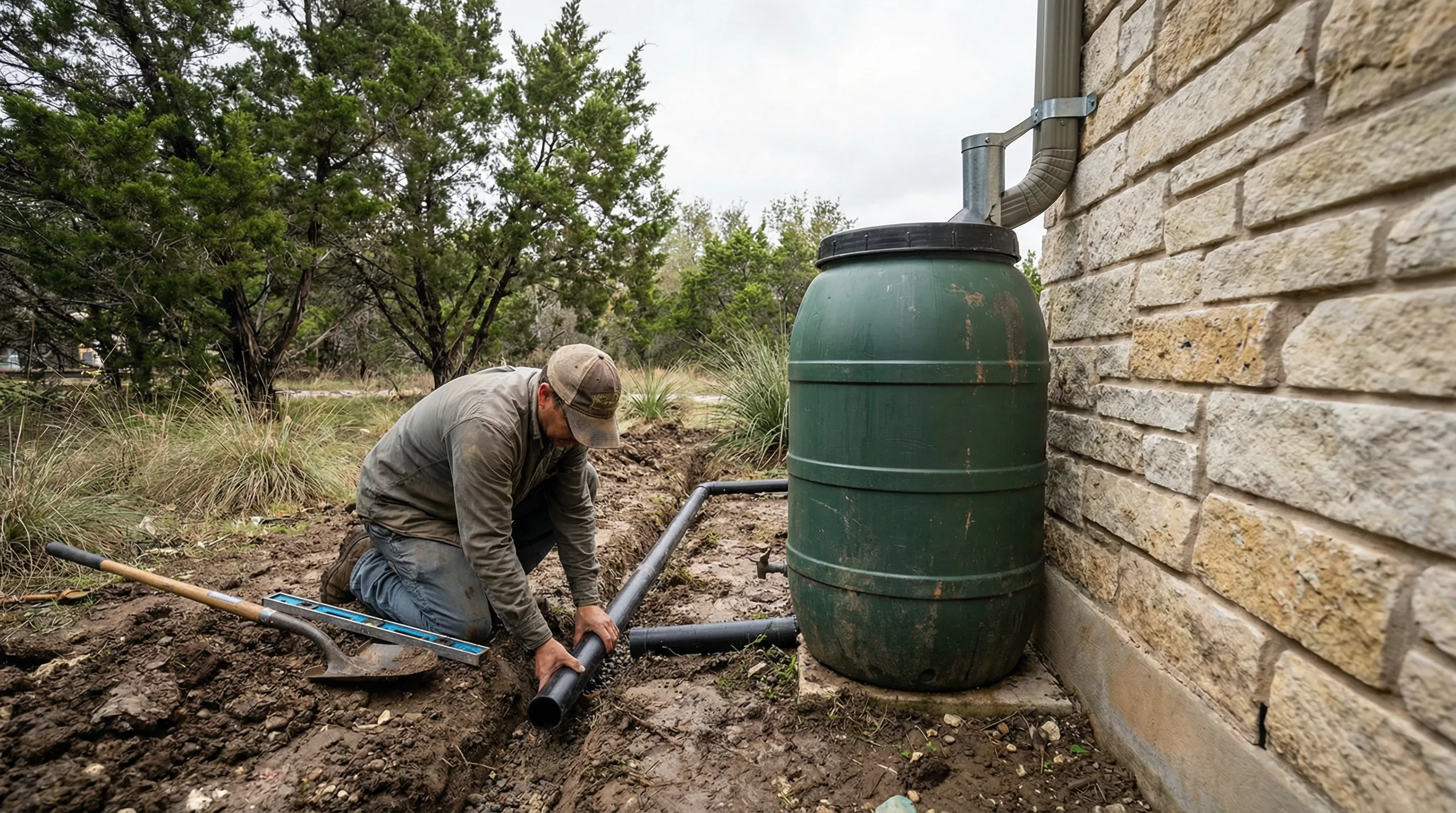
Many Hill Country homes have rooflines that make rainwater harvesting practical. Even if you don’t install a cistern immediately, you can design toward it:
- Route downspouts intentionally (don’t dump water onto a slope)
- Create an overflow path that doesn’t erode planting beds
- Use drip zones that can be fed by stored rainwater later
Establishment plan (the first season determines success)
Most “native plant failures” happen in the first season. Ask your installer for:
- A first-season watering schedule by zone (full sun vs shade)
- A realistic replacement policy for early plant loss
- A simple maintenance checklist for pruning and mulch depth
Starter projects that make Hill Country yards feel “done” quickly
| Starter project | Typical Range | Best for |
|---|---|---|
| Entry beds + deer-resistant structure | $4,000 – $10,000 | Curb appeal that survives browsing. |
| Drip + bed retrofit | $1,500 – $5,500 | Fix waste and plant loss first. |
| Slope planting + erosion control | $8,000 – $25,000+ | Stabilize problem slopes before adding “pretty.” |
| Shaded understory garden | $4,000 – $12,000 | A calm, low-water bed under mature oaks. |
Quote checklist (Dripping Springs edition)
- Do they address slope/drainage paths, not just plant lists?
- Are plant sizes specified (and do they explain the tradeoff)?
- Is irrigation scoped as zones + drip + controller settings?
- Do they include an establishment plan and first-season care expectations?
- Do they acknowledge deer pressure in the design (not just “deer-resistant plants”)?
Maintenance calendar (Dripping Springs edition)
- Spring: prune, refresh mulch, check emitters and downspout outlets
- Summer: deep watering cycles, spot-weed after storms, protect young plants during heat waves
- Fall: cut back perennials after blooms, refresh mulch, plant cool-season natives
- Winter: freeze protection for young plants; cleanup pass before spring growth
If habitat is part of your goal, certification checklists are helpful guardrails:
Common mistakes to avoid (Dripping Springs edition)
- Skipping erosion control. If runoff cuts channels through beds, you’ll re-buy plants every season.
- Over-lighting the landscape. Bright, unshielded lighting reduces night-sky comfort.
- Choosing plants only for flowers. Mature size, winter shape, and deer pressure matter more long-term.
- Assuming “drought-tolerant” means “no water.” Establishment care still matters.
If you want a plan that ties together slope work, planting, and long-term maintenance, start with Sustainable Landscape Design. If you’re explicitly reducing turf and water use, Xeriscaping & Drought-Resistant Design is usually the right scope anchor.
Start your Dripping Springs plan
If you want a sustainable landscape that survives deer, rocks, and Hill Country storms, we can connect you with specialists who design for the site first—then make it beautiful.
Ready for next steps?
Tell us what you’re planning and we’ll match you with vetted local pros who can quote the work and explain the tradeoffs for your property.