

Quick Summary
- Who this is for: Cedar Park homeowners upgrading a builder-grade patio into a usable outdoor “room” that holds up on clay.
- Outcome: A drainage-first checklist, materials that perform, and quote questions that prevent rework.
- Cost/Timeline: Many projects land in $8,000–$45,000; outdoor kitchens commonly run $15,000–$60,000. Timelines depend on drainage scope and HOA review.
For an overview of what local specialists can build, start with our Hardscaping & Outdoor Living service page and the Cedar Park service-area hub at Cedar Park service area.
How much does hardscaping cost in Cedar Park, TX?
In Cedar Park, most hardscaping projects land in $8,000–$45,000, with outdoor kitchens typically $15,000–$60,000 once utilities are included. Properly built paver patios often price $15–$25/sq ft depending on base and drainage. The biggest cost drivers are clay-soil movement mitigation, drainage fixes, and access.
Common Cedar Park “Why We’re Calling Now” Problems (And the Fix)
If you’re searching because of a specific pain point, you’re not alone. These are some of the most common Cedar Park hardscaping triggers we hear (especially in areas like Brushy Creek, Twin Creeks, Buttercup Creek, and nearby Avery Ranch):
| Your problem | What usually solves it | What to ask the contractor |
|---|---|---|
| Backyard flooding in heavy rain / water pooling near fences | Grading + surface drains + sometimes a French drain | Where will water discharge, and how is overflow handled? |
| Patio too hot in afternoon sun | Shade-first plan + lighter materials + airflow | Are footings and electrical runs included for fans/lighting? |
| Small backyard needs patio ideas | Zoning into “rooms” + built-in seating | What patio size fits our table + circulation (not just “bigger”)? |
| Uneven pavers causing trips | Paver reset + base correction + edge restraint | What caused the settlement, and how are you preventing repeat issues? |
What Hardscaping Covers (Beyond “A New Patio”)
Hardscaping is the permanent, structural layer of your yard. In Cedar Park, the most requested projects include:
- Paver patios for flexible performance on shifting soils
- Retaining walls and seat walls to tame grade changes and add usable “rooms”
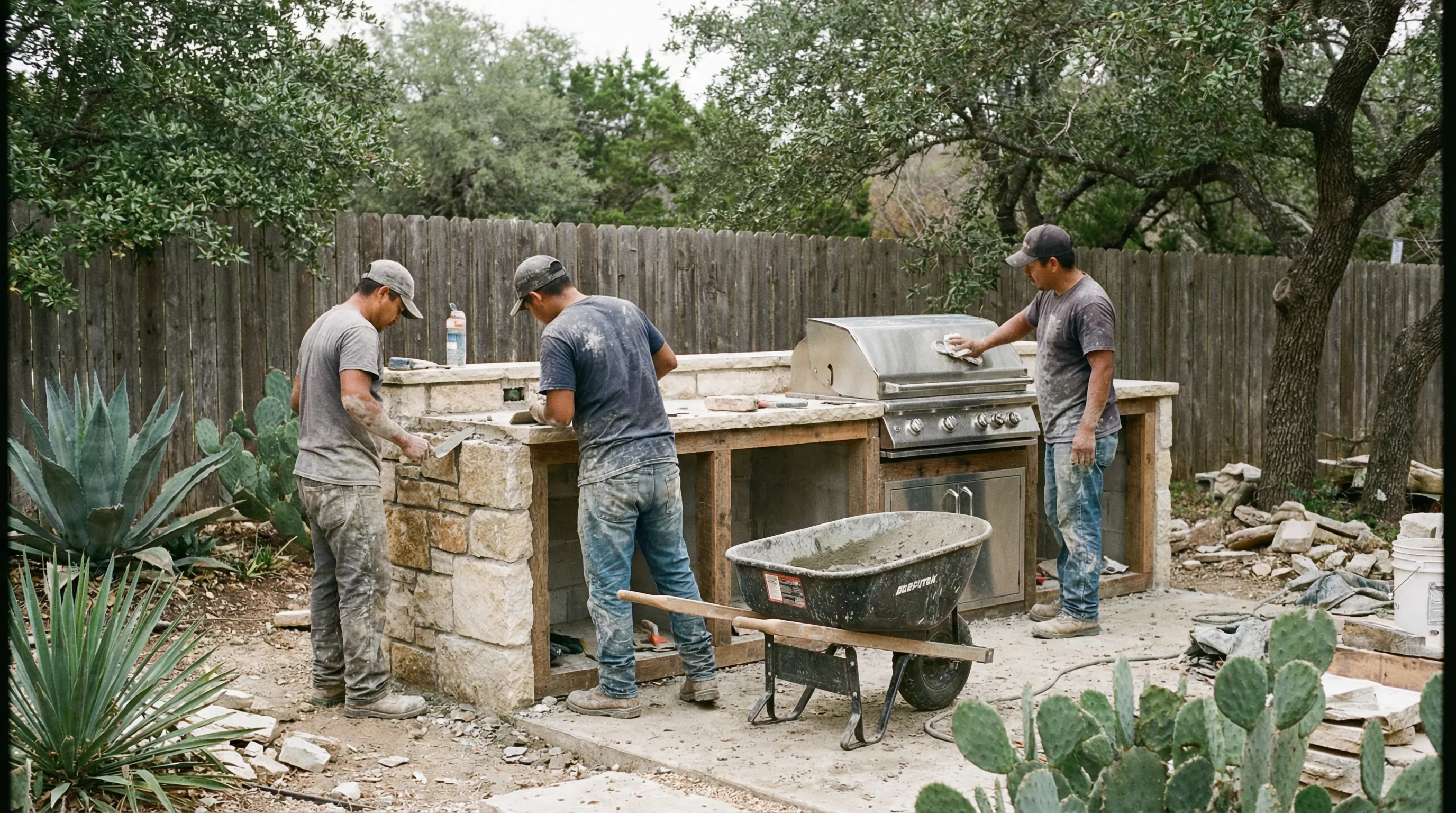
- Outdoor kitchens and fire features for year-round entertaining
- Permeable paving + drainage for yards that flood or stay muddy
- Maintenance and restoration (cleaning, sealing, re-sanding) to protect the investment
Explore specific scopes here:
- Structural Hardscaping & Patios
- Outdoor Kitchens & Fire Features
- Permeable Pavers & Drainage
- Hardscape Maintenance & Restoration
Cedar Park Yard Challenges (And How Pros Solve Them)
1. Clay Soil Movement (The “Why Is My Patio Uneven?” Problem)
Expansive clay is common across the Austin metro, and Cedar Park is no exception. When the soil expands and contracts seasonally, poorly prepared patios crack or settle.
What to look for in a proposal:
- Excavation depth and compacted base layers (not just “we’ll add base”)
- Edge restraint details for pavers (critical for long-term stability)
- A plan for where water goes during heavy storms
If you want a plain-language primer on how runoff and drainage planning works in this region, the City of Austin Watershed Protection resources are a helpful baseline (even if you’re outside Austin city limits).
2. Sloped Backyards in Family Neighborhoods
Many Cedar Park lots have grade changes that make space feel smaller than it is. A well-designed retaining wall and step layout can turn a hard-to-use slope into a flat dining zone, a play zone, and planting areas.
If a wall is tall or close to structures, ask about engineering requirements and HOA review steps. Rules vary by neighborhood and municipality.
3. Heat and Afternoon Sun
In neighborhoods with limited tree canopy, hard surfaces can get uncomfortably hot. Teams can improve comfort with:
- Shade structures (pergolas, covered patios) and fan-ready layouts
- Heat-aware surface choices (lighter pavers, cool-feel materials near pools)
- Outdoor kitchen placement that avoids direct late-day sun when possible
Cedar Park Design Ideas That “Feel Bigger” Than the Lot
If your backyard is a standard suburban rectangle, the best hardscaping isn’t “more square footage.” It’s better zoning:
- Dining zone: paver patio with a clear path to the back door (no bottlenecks)
- Grill/cooking zone: outdoor kitchen or grill island placed to keep smoke away from doors
- Fire feature zone: separate seating area so one group can cook while another relaxes
- Kids/pets zone: durable edges and steps that keep play areas safer and easier to supervise
If you want ideas that translate well across the metro, compare this with our Austin hardscaping guide and Bee Cave hardscaping guide.
Material Picks That Work Well in Cedar Park
- Concrete pavers: A top choice for clay soils because the system is flexible and repairable (individual pavers can be reset).
- Limestone: A classic Central Texas look for walls, steps, and caps; sealing helps reduce staining.
- Flagstone: Great aesthetic, but performance depends heavily on base prep and jointing details.
- Permeable pavers: Useful for drainage-prone areas and certain coverage constraints; they require deeper aggregate layers than standard patios. If you’re evaluating permeable options, the U.S. EPA overview of permeable pavements is a good explainer of how these systems work.
What a “Good Quote” Includes (Line Items You Want to See)
Hardscaping quotes can look similar on the surface while hiding huge differences in quality. A strong bid usually spells out:
- Demolition + haul-off (if replacing an existing slab or patio)
- Excavation depth and where soil/materials go
- Base materials and compaction approach (not just “add base”)
- Drainage plan (where water is routed and how it’s captured)
- Edge restraint details for pavers (the “frame” that keeps pavers tight)
- Wall drainage details (backfill + drainage + reinforcement, as applicable)
- Jointing + sand type (especially if weeds or washout are a concern)
- Cleanup and protection (sod protection, driveway protection, daily site cleanup)
If a quote is missing most of the “invisible” items above, the low price is often a warning—not a bargain.
Typical Hardscaping Costs in Cedar Park
Every property is different, but these ranges are common starting points when comparing quotes:
| Project Scope | Estimated Cost | Notes |
|---|---|---|
| Patio / Structural Hardscaping | $8,000 – $45,000 | Patios often start around $15–$25/sq ft; walls vary by height and access. |
| Outdoor Kitchen / Fire Feature | $15,000 – $60,000 | Simple grill islands cost less; plumbing/electrical increases scope. |
| Permeable Pavers | $18 – $35 per sq ft | Deeper base layers and drainage aggregate raise cost. |
| Maintenance / Restoration | $500 – $3,500 | Cleaning, sealing, re-sanding, and spot repairs. |
If you are comparing bids, make sure the scope includes drainage planning and site prep, not just surface materials.
Bid Comparison Checklist (Copy/Paste for Quotes)
Use this as a quick sanity check when you have multiple proposals on your desk:
- Where does water go during a heavy storm (before and after the project)?
- How deep is excavation, and how will base layers be compacted?
- What edge restraint method is used for pavers?
- How will slopes be set so water drains away from the house?
- For walls: what drainage and reinforcement is included behind the wall?
- For kitchens: who runs gas/electrical/water, and are licensed trades involved?
- What maintenance is expected (sealing schedule, joint refresh, cleaning)?
The Process Great Crews Follow
The best outcomes follow a repeatable, engineering-forward sequence:
- Site & drainage assessment (slope, soil, and water flow before aesthetics)
- Design & engineering (especially for walls, steps, and major grade changes)
- Material selection (durability + heat performance + style)
- Foundation & prep (excavation, compaction, and base build-out)
- Precision installation (clean edges, consistent slopes, and proper joints)
A Phased Plan (If You Want the Backyard Now, Not in 12 Months)
If budget or schedule is tight, you can still avoid “redo” costs by building a phased plan:
- Phase 1 (Performance): drainage fixes + a correctly built patio base and surface
- Phase 2 (Comfort): shade structure + lighting + seating walls
- Phase 3 (Lifestyle): outdoor kitchen + fire feature upgrades
The key is to plan utilities, footings, and slopes in Phase 1 so you don’t cut into a finished patio later.
Maintenance: How to Keep Pavers and Stone Looking New
Cedar Park’s heat, storms, and organic debris can stain stone and break down joints over time. Most homeowners get the best results with a periodic program:
- Pressure washing and deep cleaning
- Polymeric sand replacement when joints loosen
- Resealing every few years (depending on product and sun exposure)
- Spot repairs for settled sections to remove trip hazards
If you are also refreshing planting beds around new patios, our 2025 xeriscaping cost guide helps you align hardscape and landscaping budgets.
If You Need a Fast Repair (Trip Hazards, Storm Damage, Washouts)
If you’re dealing with urgent issues like a trip hazard paver edge or storm damage, treat it like a safety job first:
- Photograph the problem (wide shot + close-up) and note when it started.
- Keep people away from the hazard (especially kids/guests).
- Ask for a cause diagnosis, not just a reset. Settlement usually means base or drainage issues.
- Request a “repair + prevention” plan (e.g., reset plus edge restraint, drainage correction, or base rebuild).
Start Your Project
If you are ready to build a patio, wall, or outdoor kitchen in Cedar Park, get matched with specialists who build for drainage and longevity.
Ready for next steps?
Tell us what you’re planning and we’ll match you with vetted local pros who can quote the work and explain the tradeoffs for your property.