

Quick Summary
- Who this is for: Georgetown homeowners who want patios and walkways that stay level on expansive black clay (and feel safe for everyday use).
- Outcome: A stability-first hardscape plan (base + drainage) plus accessibility-friendly details that still look premium.
- Cost/Timeline: Patios often land in $8,000–$45,000+; outdoor kitchens commonly run $15,000–$60,000. The “invisible” work (base depth + drainage) is what protects the investment.
For a full scope overview, see our Hardscaping & Outdoor Living page and the Georgetown service-area hub at Georgetown service area.
How much does hardscaping cost in Georgetown, TX?
In Georgetown, most patio and hardscape projects start around $8,000 and run to $45,000+, with outdoor kitchens commonly $15,000–$60,000. On black clay, the spend is often in base depth and drainage—not surface materials. Permeable systems typically price $18–$35/sq ft, and resets/maintenance $500–$3,500.
Georgetown Priorities: Stable, Low-Maintenance Outdoor Living
1. Walkways and Patios That Stay Level
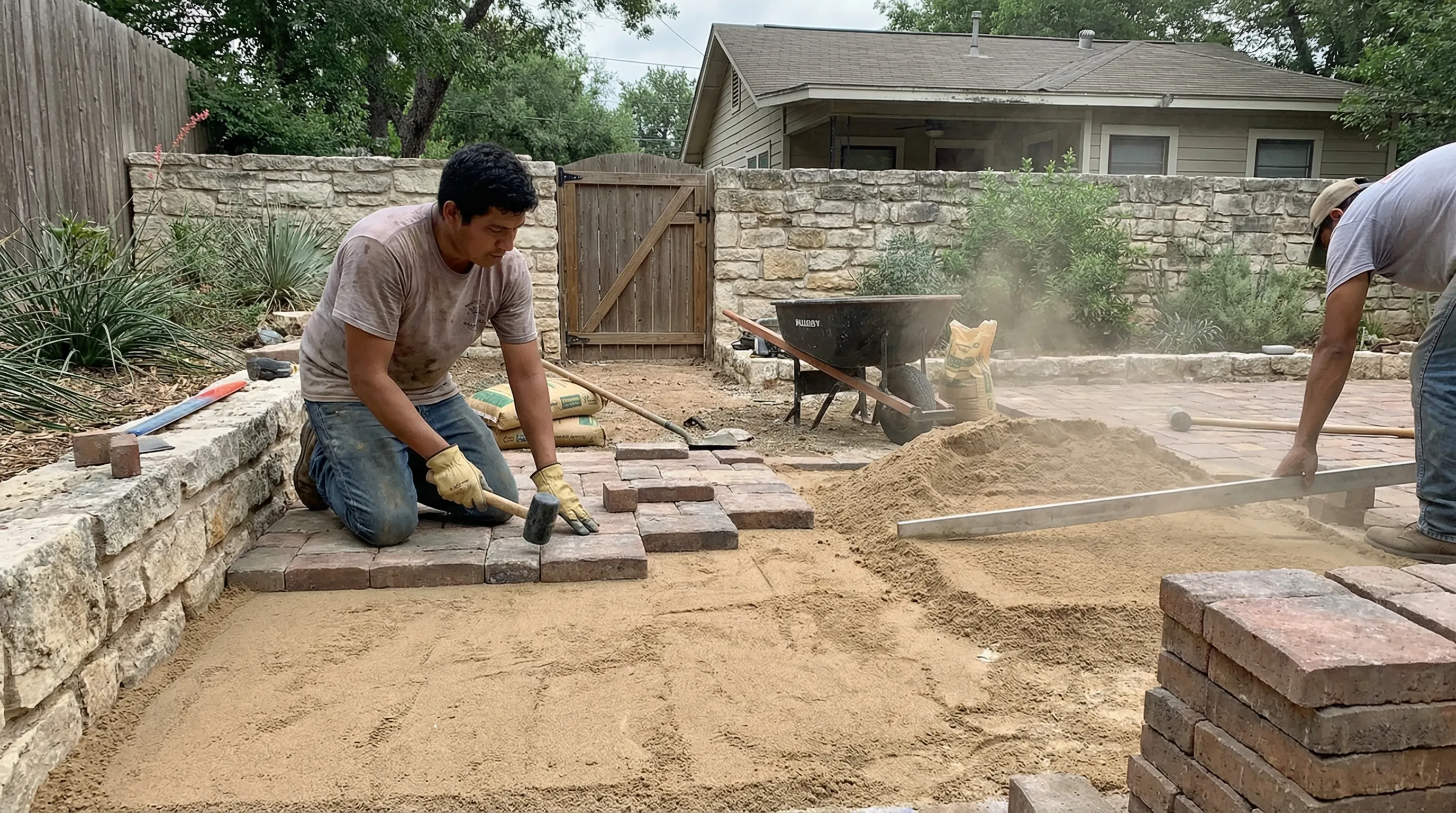
In Georgetown, the biggest enemy is uneven movement: settled pavers, cracked edges, and small trip hazards that grow over time. Great crews reduce this risk with:
- Proper excavation and compacted base layers
- Edge restraint and clean transitions
- Drainage planning so water does not saturate the subgrade
Learn more: Structural Hardscaping & Patios
If you want a clear primer on runoff, drainage, and erosion concepts used across Central Texas, the City of Austin Watershed Protection resources are a good place to start (even if your job is in Georgetown).
Georgetown Problems That Signal “Drainage + Base” (Not “New Pavers”)
In Georgetown (especially around Sun City, Berry Creek, and Wolf Ranch), these issues usually mean you need a drainage and base conversation first:
- Clay soil drainage problems and recurring puddles after storms
- Water pooling near patio doors or against the slab edge
- Trip hazards from settled pavers (often after wet seasons)
- Cracked patio needing resurfacing where movement is the real driver
If a contractor jumps straight to “let’s swap materials” without talking about water flow and base prep, that’s a red flag.
2. Permeable Pavers for Drainage-Prone Areas
Permeable pavers allow water to move through joints into a drainage aggregate base. They are often used to reduce standing water on patios, walkways, or drive extensions.
Important note: impervious cover rules and permeable “credit” vary by municipality and HOA, so always confirm local requirements for your specific property.
Learn more: Permeable Pavers & Drainage. If you want a simple explainer on how permeable pavement systems work, the U.S. EPA permeable pavement overview is a strong reference.
3. Accessible Design Without Compromise
In communities like Sun City, safe movement matters. Good hardscaping can improve accessibility by:
- Reducing abrupt elevation changes
- Using non-slip surfaces and smoother thresholds
- Designing steps with consistent risers (and handrail-ready layouts when needed)
Georgetown-Friendly Design Details (Especially for Aging-in-Place)
If you’re planning hardscaping with long-term comfort in mind, small details make a big difference:
- Smoother routes: wider walkways and gentle transitions where possible
- Surface choice: non-slip textures for patios and pool decks
- Step consistency: consistent riser heights reduce missteps
- Lighting: warm, low-glare lighting along steps and paths (helps without feeling “commercial”)
These choices protect against the most common everyday hardscape failure: small trip hazards created by movement, poor drainage, or inconsistent installation.
Bid Comparison Checklist (Trip-Hazard Prevention Edition)
- Are transitions designed to minimize abrupt edges and tall thresholds?
- What base depth/compaction method is specified (not implied)?
- How will they prevent water from saturating the base and shifting pavers?
- If adding steps: are risers consistent and treads deep enough for comfort?
- What maintenance is expected to keep joints tight and surfaces safe?
Material Guidance for Georgetown
- Concrete pavers: Flexible, repairable, and a strong fit for expansive soils
- Limestone details: Great for caps, steps, and walls; seal when needed
- Permeable systems: Best for chronic drainage issues; deeper base layers required
Cold Snaps Matter (Yes, Even Here)
Georgetown still sees occasional hard freezes (especially memorable in 2021). Freeze/thaw cycles can highlight weak spots in joints and drainage. That’s another reason to prioritize base prep, proper slopes, and maintenance: when water sits in the wrong place, you feel it later.
When Permeable Pavers Are Worth It in Georgetown
Permeable pavers are most valuable when you have recurring puddles, runoff that cuts channels, or a driveway/patio area that never fully dries. They can help water infiltrate into a drainage aggregate base instead of running across the surface. The tradeoff is cost: permeable systems usually require deeper base layers and specific joint aggregate, so they’re more expensive than standard patios.
If you’re not sure, ask a contractor to walk you through why they’re recommending permeable vs. traditional pavers based on your slope and drainage paths.
What to Ask for in a “Low-Maintenance” Proposal
In Georgetown, “low maintenance” should mean the contractor has a plan for long-term stability, not that you’ll never touch the patio again. Ask what they recommend for:
- Joint stability: how to prevent washout and weeds
- Cleaning: how to avoid slippery surfaces in shaded areas
- Sealing schedule: if/when sealing is recommended for your material choice
- Spot resets: how they handle small settled areas before they become trip hazards
Typical Hardscaping Costs in Georgetown
| Project Scope | Estimated Cost | Notes |
|---|---|---|
| Patio / Structural Hardscaping | $8,000 – $45,000 | Patios often start around $15–$25/sq ft. |
| Outdoor Kitchen / Fire Feature | $15,000 – $60,000 | Utilities and appliances drive scope. |
| Permeable Pavers | $18 – $35 per sq ft | Costs more than standard patios due to base depth. |
| Maintenance / Restoration | $500 – $3,500 | Cleaning, sealing, re-sanding, and repairs. |
Keep It Looking Sharp: Maintenance Basics
Most homeowners protect their investment with:
- Occasional pressure washing/deep cleaning (especially shaded areas)
- Resealing every few years depending on product and exposure
- Joint-sand refresh to keep pavers stable
- Spot repairs for settled sections before they become widespread
Learn more: Hardscape Maintenance & Restoration
Timeline: What a Typical Project Looks Like
Most projects start with measurements and a drainage-focused layout, then move into excavation/base prep and installation. Walkways and patios can be quicker; retaining walls, steps, and outdoor kitchens take longer because they’re more structural and often require more trade coordination. If your goal is to minimize trip hazards long-term, prioritize schedule time for site prep and finish transitions instead of rushing to “done.”
If you want a metro-wide baseline, compare this with our Austin hardscaping guide. If your lot is sloped or rock-heavy, our Bee Cave hardscaping guide has extra retaining wall and erosion-control context.
Start Your Project
If you are planning Georgetown hardscaping, we can connect you with vetted specialists who build for drainage, longevity, and safe everyday use.
Ready for next steps?
Tell us what you’re planning and we’ll match you with vetted local pros who can quote the work and explain the tradeoffs for your property.