

Quick Summary
- Who this is for: Leander homeowners starting from a builder-grade pad or “just dirt” backyard and wanting a finished outdoor space.
- Outcome: A new-build hardscape playbook (base + drainage + future utilities) that prevents settling and puddling.
- Cost/Timeline: Patios and structural hardscaping often land in $8,000–$45,000+; outdoor kitchens commonly run $15,000–$60,000. Rocky excavation and utility trenching are frequent schedule drivers.
For an overview of services, see our Hardscaping & Outdoor Living page and the Leander service-area hub at Leander service area.
How much does hardscaping cost in Leander, TX?
In Leander, most patio and structural hardscaping projects start around $8,000 and run to $45,000+, with outdoor kitchens commonly $15,000–$60,000 once utilities and appliances are included. Permeable systems typically price $18–$35/sq ft, and maintenance/resets often land in $500–$3,500. Drainage scope and access usually drive the spread.
The Most Common Leander Hardscaping Upgrades
1. Patios That Replace Builder Slabs
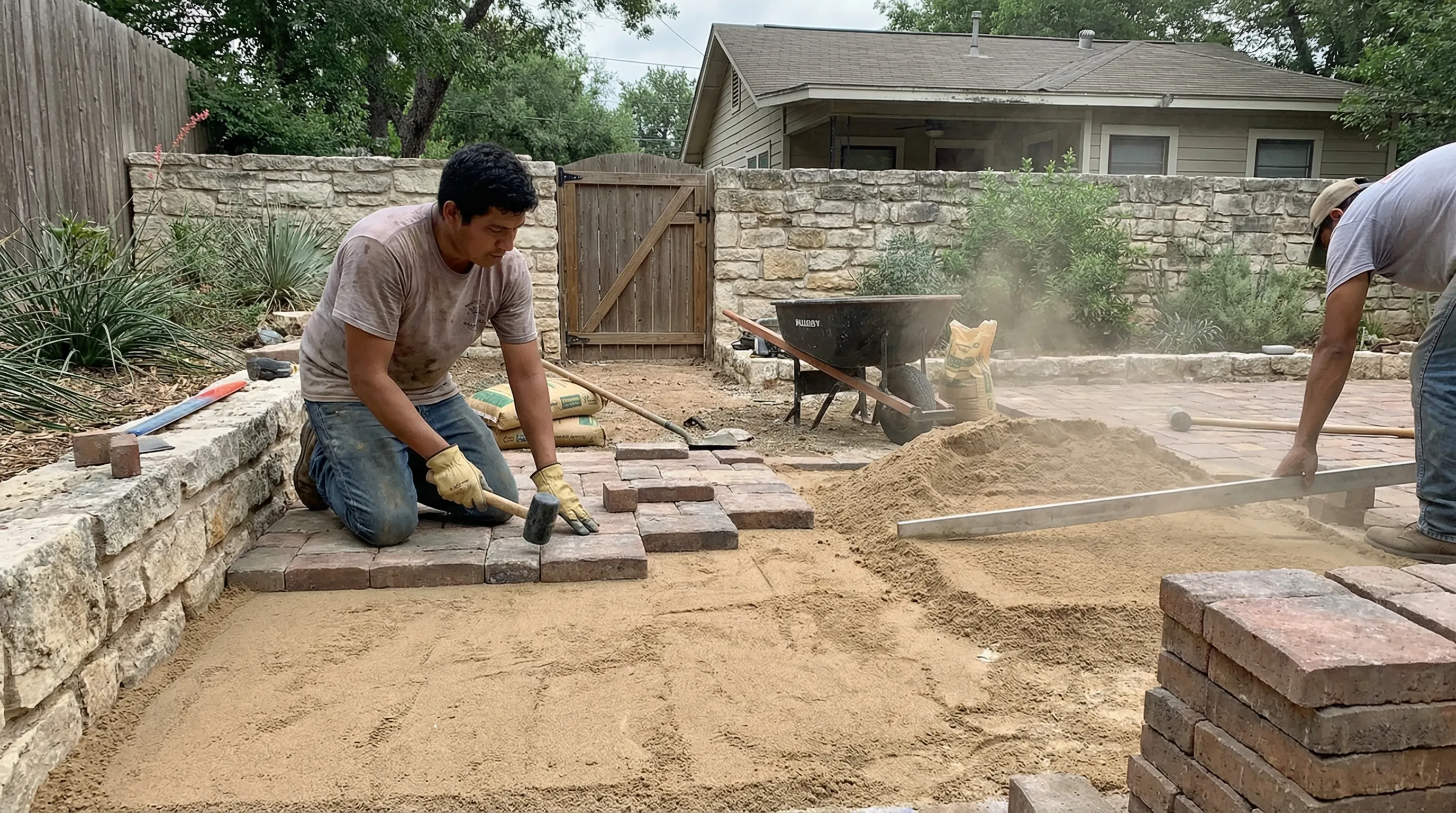
If your yard has a small concrete pad, you can typically expand it into a true outdoor “room” with pavers, stone, seating walls, and a clear drainage plan. Pavers are especially popular on clay soils because they perform better than rigid poured concrete when the ground moves.
2. Retaining Walls and Terracing
Many Leander lots are graded steeply. Retaining walls and terraced steps can:
- Create a flat dining zone
- Add safer transitions between levels
- Prevent erosion that undermines patios and fences
For tall or structural walls, ask about engineering needs and permitting/HOA steps (requirements vary).
3. Outdoor Kitchens (Built Like Real Kitchens)
A great outdoor kitchen is a coordination exercise: masonry, electrical, gas, and sometimes plumbing. Pros plan appliance clearances, ventilation, and safe utility runs, then build a durable island that can handle weather and heat.
Learn more: Outdoor Kitchens & Fire Features
Leander-Specific Site Challenges
Rocky Excavation
Some areas (especially west) can be rock-heavy, affecting:
- Footings for retaining walls
- Trenching for drainage, electrical, or gas lines
- Step and terrace construction
Good proposals call out how excavation is handled, not just the finished materials.
New-Construction Soil and Drainage
Many new builds have compacted subgrade and minimal topsoil. Hardscape success depends on:
- Base excavation and compaction standards
- Clear water-routing away from the foundation
- Matching surface slopes to realistic runoff patterns
If your yard holds water after storms, ask about drainage integration or permeable paving. This is also where local experience matters: after events like the 2021 freeze and heavy spring storms, small drainage mistakes tend to show up fast in joints, edges, and settled sections.
Learn more: Permeable Pavers & Drainage. For a practical baseline on drainage concepts and runoff behavior in Central Texas, the City of Austin Watershed Protection guidance is useful (even for nearby cities).
Leander Backyard Layout Playbook (Simple, High-Function Zones)
If you’re starting from a builder-grade pad, the fastest way to make your yard feel “finished” is to design in zones:
- Entry path + landing: a dry, stable walkway from gate to back door (great first project if you have muddy traffic lanes)
- Dining patio: your main flat surface, sized for the table you actually use
- Cooking zone: grill island or outdoor kitchen positioned for wind, smoke, and easy utility runs
- Grade-change solution: steps and a short retaining wall where the slope steals usable space
This is also where patios and planting should work together. If you’re planning new beds around the hardscape, use our 2025 xeriscaping cost guide to align budget and scope.
New-Build Reality Check: What to Fix First
If your search starts with phrases like “new build backyard just dirt”, “builder grade patio too small”, or “standing water after rain”, the best first move is usually not a fancy finish. It’s getting the infrastructure right:
- Drainage pathing: where water goes from roof and yard during heavy rain
- Compaction and base: builder-grade pads and surrounding soil are often not designed for expanded patios
- Grade-change control: short walls and steps prevent erosion from undermining surfaces
- Future utilities: plan for lighting and outdoor kitchen runs before the patio is finished
If you’re in rockier areas (like around Crystal Falls), ask specifically how excavation and trenching are handled—rock work can change both cost and timeline.
Materials That Make Sense in Leander
- Concrete pavers: Durable, repairable, and flexible on shifting soils
- Limestone: Great for caps, steps, and wall veneer with a Central Texas look
- Flagstone: High-end aesthetic; performance depends on base and joint details
- Permeable systems: Best for drainage-prone areas; require deeper base layers. The U.S. EPA overview of permeable pavements does a good job explaining what “permeable” actually means in practice.
Timeline: What a Typical Leander Project Looks Like
Most hardscaping projects move in phases: design/measurements, material selection, excavation/base prep, then installation. A simple patio can be relatively quick once scheduled, while retaining walls and outdoor kitchens usually take longer because they involve more structure, inspections, and trade coordination. The biggest timeline variable is often site prep (especially rock excavation) rather than surface materials.
Quote Checklist: Apples-to-Apples Comparison
When you compare two quotes, you’re really comparing what’s “invisible.” A strong bid usually clarifies:
- Excavation depth + base materials (and whether geotextile is used where appropriate)
- Compaction approach and how settlement risk is handled
- Edge restraint method for pavers
- Drainage plan: surface slope, drains, and discharge location
- Retaining wall details: drainage behind the wall and reinforcement approach
- Utility coordination for kitchens/lighting (who does what, and whether licensed trades are included)
Typical Hardscaping Costs in Leander
| Project Scope | Estimated Cost | Notes |
|---|---|---|
| Patio / Structural Hardscaping | $8,000 – $45,000 | Patios often start around $15–$25/sq ft; walls vary widely. |
| Outdoor Kitchen / Fire Feature | $15,000 – $60,000 | Utilities and appliance scope drive cost. |
| Permeable Pavers | $18 – $35 per sq ft | Deeper aggregate base increases cost. |
| Maintenance / Restoration | $500 – $3,500 | Cleaning, sealing, re-sanding, spot resets. |
If rock excavation is heavy, expect higher labor and equipment costs.
Bid Comparison Checklist (Especially for New Builds)
- What is the drainage plan (surface slope + drains + discharge location)?
- How deep is the base, and how is it compacted?
- Are pavers edged with a true restraint system (not just “extra sand”)?
- For walls: what drainage gravel and weep/drain detail is behind the wall?
- For kitchens: who handles gas/electrical, and is a licensed trade included?
- What maintenance schedule do they recommend (re-sand, seal, clean)?
A Contractor Checklist (Ask These Before You Sign)
- Where will water drain during a heavy storm?
- What base depth and compaction method will you use?
- How are edges restrained to prevent paver spread?
- For retaining walls: what reinforcement and drainage is included behind the wall?
- For outdoor kitchens: who handles gas/electrical, and what trades are licensed?
If you want a metro-wide baseline to compare against, skim our Austin hardscaping guide. If you are on rockier terrain, our Bee Cave hardscaping guide has extra retaining wall and erosion-control context that translates well to parts of Leander.
Start Your Project
If you want hardscaping built to last (not just to look good on day one), we can connect you with vetted specialists serving Leander.
Ready for next steps?
Tell us what you’re planning and we’ll match you with vetted local pros who can quote the work and explain the tradeoffs for your property.