
Insights
Irrigation Installation & Repair in Austin, TX (2025 Guide)
Published September 22, 2025
Quick Summary
- Who this is for: Austin homeowners with misting, leaks, dry spots, or watering rules confusion.
- Outcome: A zone-and-pressure-first fix that reduces water waste while keeping plants healthier through Texas heat.
- Cost/Timeline: Many repairs land in $150–$900; bigger upgrades like drip conversion or controller installs commonly run $800–$3,500+ depending on scope.
How much does irrigation installation and repair cost in Austin, TX?
In Austin, irrigation repairs typically cost $150–$500 for minor fixes and $250–$900 for troubleshooting/tune-ups, while upgrades like drip bed conversion often run $800–$3,500. Full or partial overhauls can reach $2,000–$12,000+ depending on zone count, access, and whether pressure regulation and controller programming are included.
| Scope | Typical Range | Notes |
|---|---|---|
| Minor repair (broken head, small leak) | $150 – $500 | Varies by diagnostics and parts. |
| Zone troubleshooting + tune-up | $250 – $900 | Includes nozzle/arc adjustments and basic fixes. |
| Drip conversion for beds | $800 – $3,500 | Depends on bed size and zones. |
| Controller upgrade (smart controller) | $250 – $1,200 | Hardware + install/programming. |
| Partial system overhaul | $2,000 – $8,000 | Multiple zones, valves, pressure issues. |
| New system install (typical home) | $3,500 – $12,000+ | Depends on lot size and design complexity. |
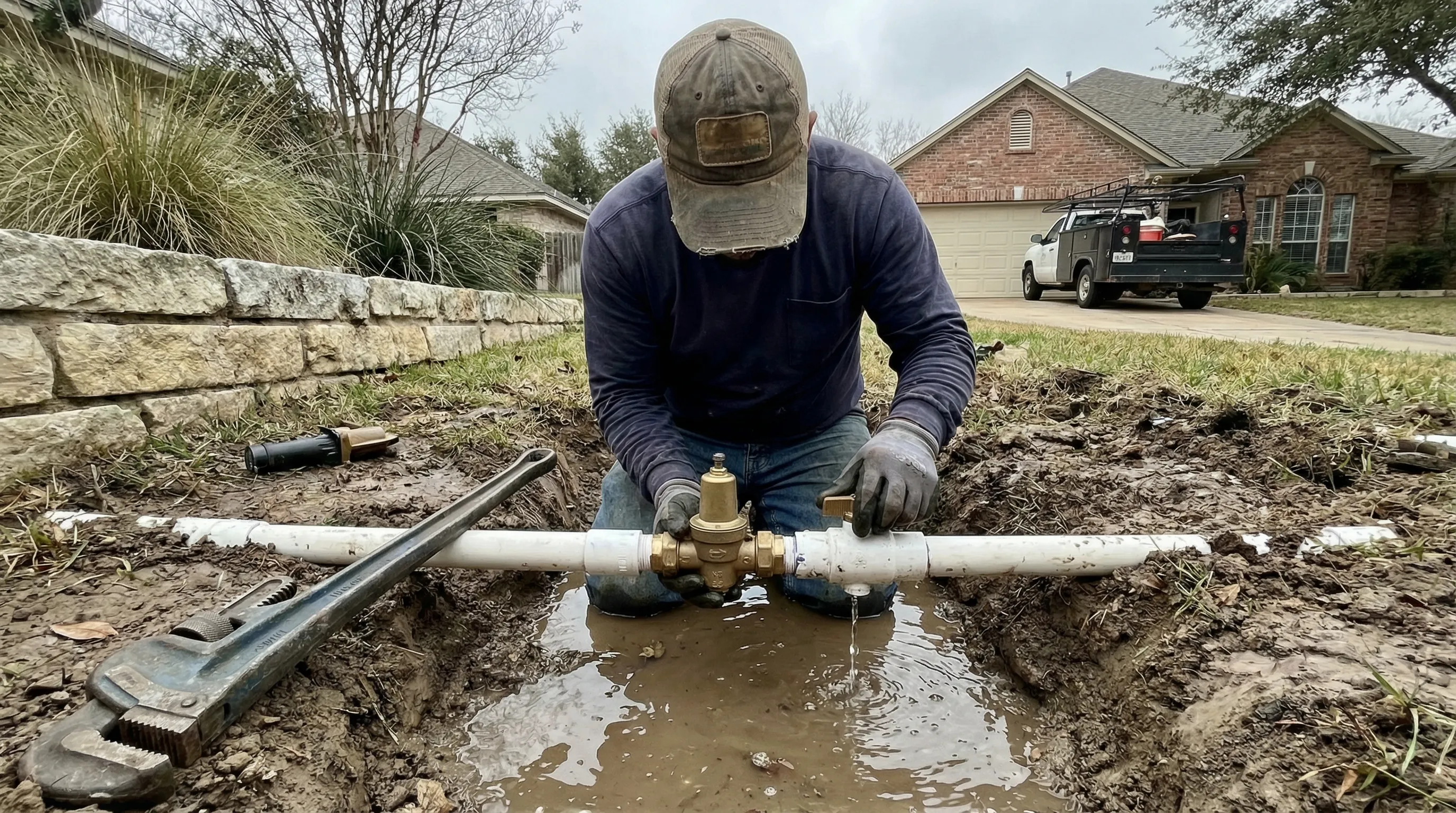
For local scope context, see Austin service area and our Irrigation Installation & Repair service page.
Austin irrigation reality: efficiency matters more than “more watering”
Austin summers punish shallow, frequent watering. Efficient systems deliver water where it’s needed, at the right pressure, on zones that match the sun.
If you’re also rethinking plantings, pair this with:
Fast diagnosis: what’s wrong with your system?
| What you notice | What it usually means |
|---|---|
| Mushy spots that never dry | A leak in the line, a head seal failure, or a valve that isn’t closing fully. |
| Sudden jump in water bills | Hidden leaks, stuck valves, or schedules that never adjusted seasonally. |
| Low pressure in multiple zones | Supply/valve issues, broken lines, or a system-wide pressure problem. |
| Heads that “bubble” at the base | Cracked risers/head bodies or loose fittings below grade. |
| Fine fog drifting in the air | Pressure too high or nozzle mismatch—water drifts instead of soaking. |
| Water landing on sidewalks/driveways | Arcs/nozzles aren’t tuned (or the wrong head type is installed). |
| Uneven coverage (dry next to soaked) | Coverage gaps, clogged nozzles, pressure issues, or poor spacing. |
Drip vs sprinklers in Austin: what should go where?
Drip irrigation (best for beds and foundations)
Drip is usually ideal for planting beds because it delivers water near roots and reduces evaporation.
Rotors/sprays (best for turf zones)
If you keep turf, use the right head type and pressure regulation so water doesn’t mist away.
If you’re planning to reduce turf over time, focus on converting beds first and shrinking turf zones later.
The “pressure regulation” conversation (the biggest hidden ROI)
Many “bad irrigation systems” are actually pressure problems:
- Too much pressure causes misting and overspray
- Too little pressure causes poor coverage and dry spots
Ask any irrigation pro how they’re handling pressure regulation and head selection. If they can’t explain it clearly, keep shopping.
Smart controllers: what they do (and what they don’t)
Smart controllers help reduce waste by adjusting schedules based on weather and seasonal needs. They are not magic: they still need good zones, proper pressure, and correct emitters/nozzles.
For water-efficiency guidance and labeled products, the EPA WaterSense program is a useful reference.
Water rules and rebates (Austin-specific)
If you’re inside Austin Water service territory, rebates and programs can change what’s worth upgrading. Start here:
Even if you’re not eligible for a specific rebate, those resources are a good checklist for what “efficient” means in practice.
Starter “packages” that solve the most common Austin problems
| Package | What’s included | Best for |
|---|---|---|
| Irrigation Tune-Up | Adjust arcs/nozzles, fix minor heads, basic leak check | Systems that “sort of work” but waste water. |
| Drip Conversion (Beds) | Convert beds from spray to drip + zone split | Dry plants + wet concrete problems. |
| Smart Controller Upgrade | Controller + programming + seasonal schedule | Homeowners who want lower waste with less effort. |
| Efficiency Overhaul | Pressure regulation + multiple zone fixes + controller | Chronic misting, uneven coverage, high bills. |
Quote checklist (Austin edition)
- Do they define zones by sun exposure (full sun vs shade) or treat everything the same?
- Do they specify pressure regulation approach and head/nozzle types?
- Is “programming” included, with a seasonal schedule plan?
- Are repairs itemized (valves, heads, drip line, controller) rather than a single lump sum?
- Do they explain establishment watering vs long-term watering for your plants?
Establishment watering vs long-term watering (why schedules should change)
Many homeowners overwater because they never switch from “new plant establishment” mode to “long-term efficiency” mode. Ask your irrigation pro to define both:
| Phase | What you’re trying to do | Common mistake |
|---|---|---|
| Establishment (first season) | Keep roots consistently moist without waterlogging | Watering too shallow and too often, causing weak roots. |
| Long-term | Deep, less frequent watering that encourages resilient roots | Keeping “daily watering” because it feels safer. |
Cycle/soak (a simple trick to reduce runoff)
If water starts running off before it soaks in, the fix often isn’t “less water,” it’s shorter cycles with soak time in between. Ask if they’re using cycle/soak where appropriate, especially on slopes or compacted soils.
Maintenance plan (the small stuff that prevents big waste)
- Walk every zone monthly in summer (look for misting, clogged drip emitters, broken heads)
- Re-check arcs after mowing and edging (heads get bumped)
- Update seasonal schedules (what works in April is too much in October)
Common mistakes to avoid (Austin edition)
- Beds watered like turf. Planting beds and turf need different schedules.
- Ignoring downspouts. Bad downspout routing can create soggy zones that look like irrigation leaks.
- Skipping pressure regulation. Misting wastes water and stresses plants.
- No plan for establishment. New beds need a plan; “set it and forget it” fails.
Quick FAQ
Do smart controllers replace professional programming?
No. They help optimize scheduling, but they can’t fix bad zones or pressure issues.
What’s the highest ROI upgrade?
For many homes, it’s bed drip conversion plus pressure regulation—because it reduces overspray and keeps water near roots.
If you’re reducing turf or converting beds, pairing this with our Austin sustainable landscaping guide and the 2025 xeriscaping cost guide keeps irrigation and planting budgets aligned.
Start your irrigation fix
If you want an irrigation system that uses less water and keeps plants healthier through Texas heat, we can connect you with specialists who design zones properly and tune systems for efficiency.
Ready for next steps?
Tell us what you’re planning and we’ll match you with vetted local pros who can quote the work and explain the tradeoffs for your property.