
Insights
Complete Guide to Sustainable Landscaping in Austin, TX
Published July 12, 2025
Quick Summary
- Who this is for: Austin homeowners ready to reduce lawn, save water, and build a yard that survives heat without looking like a “rock yard.”
- Outcome: A native-forward plan (shade + soil + irrigation) that stays tidy and HOA-friendly.
- Cost/Timeline: Many projects land in $3,500–$35,000+, with 2–10 weeks depending on demo, grading, irrigation, and hardscape scope.
How much does sustainable landscaping cost in Austin, TX?
In Austin, sustainable landscaping projects often cost $3,500–$12,000 for a targeted refresh (native planting + irrigation tweaks) and $15,000–$35,000+ for a full lawn-to-xeriscape conversion with demo, soil prep, drip, and edges/paths. The best way to control budget is defining zones and phasing, not shrinking plant quality.
For a deeper cost breakdown and line-item checklist, use our 2025 xeriscaping cost guide.
Rewilding Austin: Beyond the Lawn
The days of the thirsty, manicured St. Augustine lawn are numbered. As Austin faces hotter summers and stricter water restrictions, homeowners are turning to sustainable landscaping (often called xeriscaping) to create vibrant, low-maintenance yards.
For a service-level overview of how designers approach these projects, see our Landscaping services page, then come back to this guide for Austin-specific strategies and example budgets.
But “low water” doesn’t mean “just rocks and cactus.” A well-designed native landscape in Austin is lush, colorful, and teeming with pollinators—it just happens to drink a fraction of the water.
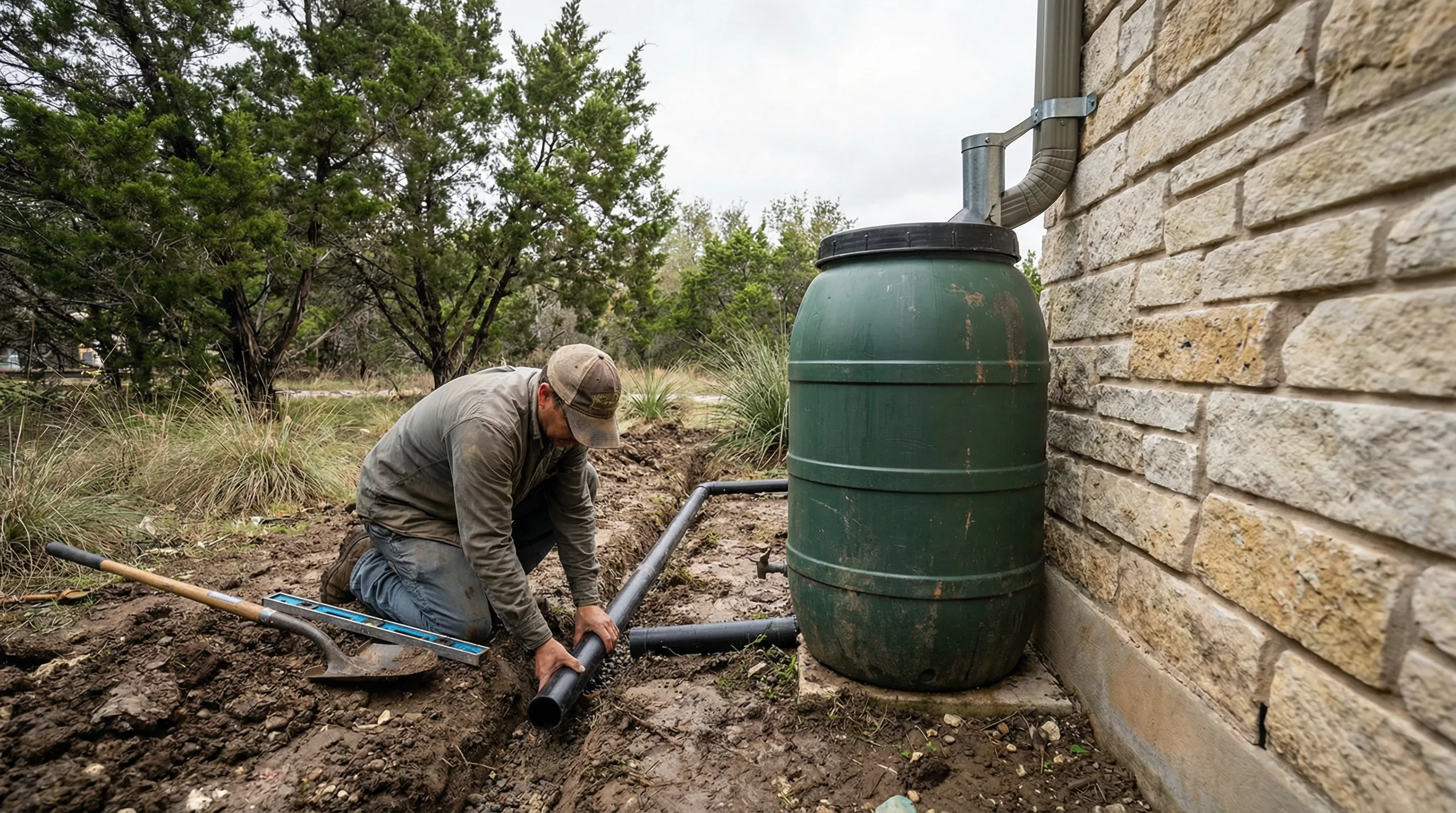
If you want to explore specific project types, start here: Xeriscaping & Drought-Resistant Design and Organic & Native Planting.
Why Go Native?
- Drought Resilience: Native plants like Texas Sage, Lantana, and Red Yucca evolved to survive our brutal Augusts. They don’t panic when you miss a watering.
- Wildlife Habitat: Your yard becomes a sanctuary for Monarch butterflies, bees, and hummingbirds.
- Reduced Maintenance: Once established, native gardens require no weekly mowing and far fewer chemical inputs.
The Texas A&M AgriLife Extension maintains research-backed plant lists and watering recommendations for Central Texas; we often cross-check our palettes against their guidance.
The “No-Mow” front yard that still looks tidy (and HOA-friendly)
Many homeowners want the benefits of lawn replacement but worry it’ll look messy or “unfinished.” The solution is to design for intentional structure:
- Defined edges: steel edging or stone borders so beds read as intentional
- Clear circulation: a decomposed granite or paver path from sidewalk to entry
- Repeat plants in groups: fewer species, repeated in drifts, looks designed (not random)
- One focal point: a small tree, boulder cluster, or sculptural agave/yaupon grouping
If you’re in the City of Austin, the Grow Green program is one of the best local references for water-wise, native-forward design ideas.
Design Strategies for Austin
The “No-Mow” Front Yard
Replacing the front lawn with a mix of decomposed granite paths, mounded planting beds, and steel edging is a massive curb appeal booster. It signals a modern, eco-conscious aesthetic that fits perfectly with Austin’s vibe.
Shade is Your Coolant
Planting the right tree in the right spot (like a Cedar Elm or Live Oak on the south/west side) can lower your patio temperature by 10-15 degrees and even reduce your home’s AC bill.
Smart Irrigation
Drip irrigation is the standard for sustainable beds. It delivers water directly to the roots, minimizing evaporation. Combined with a smart Wi-Fi controller (like Rachio or Hunter Hydrawise), you can automate watering based on actual local weather.
If you live within the city limits, review the Austin Water landscape rebate programs so you can design with potential incentives in mind.
Starter project “packages” (easy ways to start small)
These are common, high-value entry points that competitors often skip because they bias toward full-yard transformations:
| Starter project | Typical Range | Best for |
|---|---|---|
| Pollinator Parkway Strip | $2,500 – $6,500 | A narrow bed along the driveway/sidewalk that adds color and habitat fast. |
| Pocket Prairie Front Yard | $6,000 – $14,000 | Partial lawn replacement with defined edges + a simple path. |
| Shaded Side-Yard Meadow | $4,000 – $10,000 | The “forgotten” side yard: groundcover, mulch, and drip for low effort. |
| Irrigation + Bed Retrofit | $1,500 – $5,500 | Converting spray to drip + fixing waste before you buy more plants. |
If you’re ready for a full conversion, start with Xeriscaping & Drought-Resistant Design and use the cost guide to compare bids.
Investment & ROI
Converting to a sustainable landscape is an investment in infrastructure.
| Upgrade | Cost Range | Long-Term Benefit |
|---|---|---|
| Full Xeriscape Conversion | $15,000 – $35,000 | Reduces water bill by 30-50%; eliminates mowing costs. |
| Native Plant Package | $3,500 – $7,000 | Adds color and curb appeal with minimal upkeep. |
| Smart Irrigation Retrofit | $1,500 – $4,000 | Precision watering prevents waste and plant loss. |
Maintenance reality check (low maintenance ≠ no maintenance)
The best sustainable landscapes trade weekly mowing for lighter, seasonal care:
- Spring: prune, refresh mulch, adjust drip emitters, fill thin spots
- Summer: deep watering (less often), check irrigation, spot-weed after rains
- Fall: cut back perennials, top-dress compost in beds, plant cool-season natives
- Winter: protect young plants in hard freezes; clean up leaf litter where it smothers small plants
Popular Native Plants for Austin
- Trees: Texas Redbud, Mexican White Oak, Desert Willow.
- Shrubs: Cenizo (Texas Sage), Dwarf Yaupon Holly, Agarita.
- Perennials: Blackfoot Daisy, Autumn Sage (Salvia greggii), Turk’s Cap.
- Accents: Spineless Prickly Pear, Softleaf Yucca.
Want a “certified habitat” yard?
If wildlife habitat is a priority, you can design toward certification instead of guessing. Two good starting points:
Even if you never certify, those checklists keep you honest: food, water, cover, and places to raise young.
Ready to transform your yard?
Create a landscape that loves Austin as much as you do.
If you’re still comparing options, you can cross-reference this article with our Bee Cave sustainable landscaping guide and 2025 xeriscaping cost guide to see how strategies and budgets shift across the metro.
Ready for next steps?
Tell us what you’re planning and we’ll match you with vetted local pros who can quote the work and explain the tradeoffs for your property.