
Insights
Irrigation Installation & Repair in Bee Cave, TX (2025 Guide)
Published September 23, 2025
Quick Summary
- Who this is for: Bee Cave homeowners dealing with slope, rocky lots, and irrigation that mists, runs off, or leaves hot beds dry.
- Outcome: A pressure-and-zone-first plan (drip for beds, correct zones for slope/sun) that reduces waste while keeping plants healthier.
- Cost/Timeline: Many repairs run $150–$900; drip conversions and efficiency upgrades commonly land in $800–$3,500+ depending on zones and access.
How much does irrigation installation and repair cost in Bee Cave, TX?
In Bee Cave, most irrigation repairs run $150–$900, covering everything from a single head to a full zone tune-up and leak chase. Drip conversions for beds commonly cost $800–$3,500, and larger efficiency overhauls reach $2,000–$8,000+ when slopes require cycle/soak scheduling, pressure regulation, and zone splits.
| Scope | Typical Range | Notes |
|---|---|---|
| Minor repair (head, small leak) | $150 – $500 | Diagnostics and parts drive range. |
| Zone troubleshooting + tune-up | $250 – $900 | Great for uneven coverage and overspray. |
| Drip conversion for beds | $800 – $3,500 | High ROI for Hill Country planting beds. |
| Smart controller upgrade | $250 – $1,200 | Hardware + install/programming. |
| Partial overhaul | $2,000 – $8,000 | Multiple zones, valves, pressure issues. |
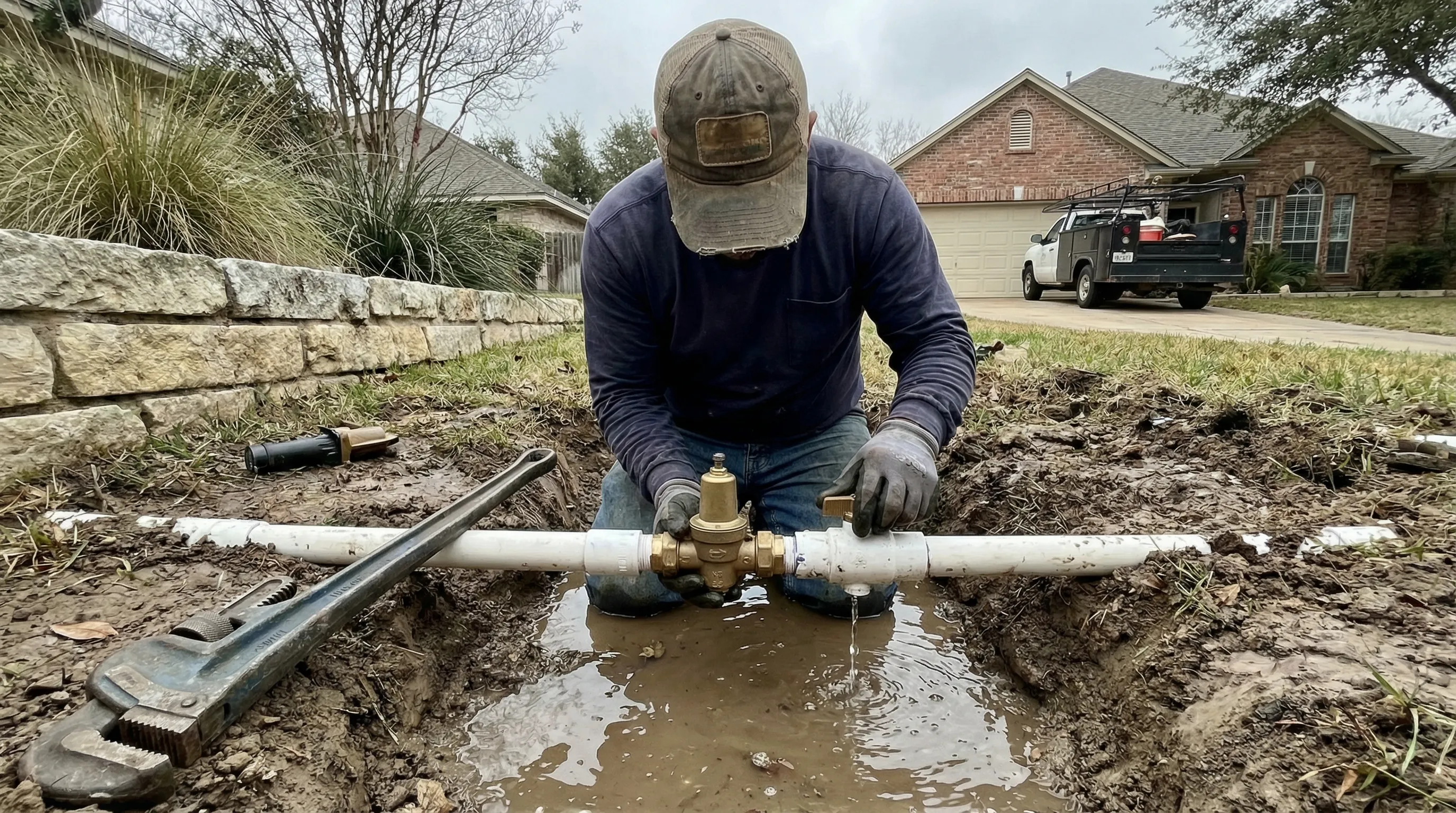 Serving Bee Cave? See our Bee Cave service area and Irrigation Installation & Repair.
Bee Cave irrigation reality: the slope and rock change the plan
On Hill Country lots, runoff and uneven moisture are common. Efficient irrigation starts with:
- Zone layouts that match sun exposure and slope
- Drip irrigation in beds (less evaporation, more targeted watering)
- Pressure regulation so heads don’t mist water away
If you’re designing beds or converting turf, these guides pair well:
Fast diagnosis: what’s going wrong?
| What you notice | What it usually means |
|---|---|
| Mushy spots that never dry | A leak in the line, a head seal failure, or a valve that isn’t closing fully. |
| Unexpected spikes in water bills | Hidden leaks, stuck valves, or a schedule that never adjusted seasonally. |
| Bubbling at head bases or soggy valve boxes | Cracked risers/head bodies, loose fittings, or slow valve leaks. |
| Misting/fogging in the air (midday is the giveaway) | Pressure too high or nozzle mismatch—watering becomes drift. |
| Overspray onto stonework and driveways | Arcs/nozzles aren’t tuned (or wrong head type for the zone). |
| Dry patches next to saturated patches | Coverage gaps, clogs, pressure issues, or poor spacing. |
Drip vs sprinklers (what should go where?)
Drip irrigation: best for beds and shrubs
Drip is usually ideal for Bee Cave planting beds because it reduces evaporation and keeps water near roots.
Sprays/rotors: best for turf and open coverage
If you keep turf, zone it separately and schedule it differently than beds. Don’t water beds like a lawn.
Pressure regulation (the most important conversation)
Many systems “fail” because pressure is wrong:
- Too high: misting and overspray
- Too low: poor coverage and stressed plants
Ask how the pro plans to regulate pressure and select heads/nozzles. You’re paying for engineering, not just parts.
Smart controllers: the right role
Smart controllers reduce waste, but they can’t fix bad zone design. Use them to fine-tune scheduling once zones and pressure are correct.
For water-efficiency guidance and labeled products, see EPA WaterSense.
Starter packages (common Bee Cave solutions)
| Package | What’s included | Best for |
|---|---|---|
| Tune-Up + Efficiency Check | Adjust arcs/nozzles, fix small heads, basic leak check | Systems wasting water without obvious failure. |
| Drip Bed Conversion | Convert beds from spray to drip + zone split | Hot, dry beds and overspray onto hardscape. |
| Controller Upgrade + Programming | Smart controller + seasonal schedule | Homeowners who want less waste with less effort. |
| Full Efficiency Overhaul | Pressure regulation + zone corrections + controller | Chronic misting and uneven coverage. |
Quote checklist (Bee Cave edition)
- Are zones split by plant type and sun exposure (not “one schedule for everything”)?
- Do they specify pressure regulation and head/nozzle selection?
- Is programming included with a seasonal schedule plan?
- Are repairs itemized by components (valves, heads, drip, controller)?
- Do they explain establishment watering vs long-term watering?
Establishment watering vs long-term watering (Hill Country version)
New plants need consistency at first, then deeper, less frequent watering later. If the schedule never changes, you’ll either waste water or stress plants.
| Phase | Goal | What to ask for |
|---|---|---|
| Establishment (first season) | Keep roots consistently moist without erosion | A schedule by zone (sun vs shade) and a plan for drip emitters. |
| Long-term | Deep watering cycles that build drought resilience | Seasonal schedule adjustments and a clear “summer vs fall” plan. |
Slope-safe irrigation (so water doesn’t run downhill)
On sloped lots, long watering cycles often turn into runoff. A good pro should discuss:
- Cycle/soak scheduling (short cycles with soak time)
- Drip placement and emitter spacing
- Protecting downspout outlets and low spots
Maintenance checklist (quick monthly walkthrough)
- Run each zone and watch for misting/overspray
- Check drip emitters for clogs (especially after soil work or mulch refresh)
- Look for soggy spots that suggest slow leaks
- Re-check arcs after mowing and edging (heads get bumped)
Common mistakes to avoid (Bee Cave edition)
- Watering beds like turf. Beds need drip and different cycles.
- Skipping pressure regulation. Misting wastes water fast in summer heat.
- No erosion plan. Runoff can cut channels through beds and wash out mulch.
- Assuming “native” means “no water.” Establishment watering still matters.
Quick FAQ
What’s the highest ROI irrigation upgrade in Bee Cave?
Bed drip conversion plus pressure regulation. It usually reduces overspray and keeps plants healthier in heat.
Can smart controllers fix a badly designed system?
No. They help optimize schedules, but the system still needs correct zones and pressure.
A simple seasonal schedule framework (use as a sanity check)
Every yard is different, but good programming changes with the season. Ask your pro to show you a plan that evolves:
- Summer: deeper cycles, fewer days per week than you’d expect, split by sun exposure
- Spring/Fall: reduced runtime as heat drops
- Winter: minimal watering for established natives (if any), depending on rainfall
If the schedule looks identical year-round, it’s not optimized.
If you’re rebuilding beds around patios or steps, it helps to align irrigation with your site plan using the Bee Cave sustainable landscaping guide (and coordinate structural work via Hardscaping & Outdoor Living when slopes are involved).
Start your Bee Cave irrigation fix
If you want irrigation that’s tuned for Hill Country heat and slopes, we can connect you with specialists who design efficient zones and reduce water waste.
Ready for next steps?
Tell us what you’re planning and we’ll match you with vetted local pros who can quote the work and explain the tradeoffs for your property.