
Insights
Irrigation Installation & Repair in Cedar Park, TX (2025 Guide)
Published September 24, 2025
Quick Summary
- Who this is for: Cedar Park homeowners with misting, overspray onto sidewalks, dry beds, or inconsistent coverage.
- Outcome: A zone-and-pressure-first fix (drip for beds, correct arcs, seasonal programming) that reduces waste and improves plant health.
- Cost/Timeline: Many repairs land in $150–$900; drip conversions and controller upgrades commonly run $800–$3,500+ depending on zones and parts.
How much does irrigation installation and repair cost in Cedar Park, TX?
In Cedar Park, most irrigation service calls run $150–$900, from a quick head/line repair to a full zone tune-up. Drip conversion for planting beds commonly costs $800–$3,500. If pressure regulation, zone splits, valve work, and controller programming are needed, plan $2,000–$8,000+ for a targeted efficiency overhaul.
| Scope | Typical Range | Notes |
|---|---|---|
| Minor repair (head, small leak) | $150 – $500 | Depends on diagnostics and parts. |
| Tune-up + troubleshooting | $250 – $900 | Great for uneven coverage and overspray. |
| Drip conversion for beds | $800 – $3,500 | High ROI for planting beds. |
| Smart controller upgrade | $250 – $1,200 | Hardware + install + programming. |
| Partial overhaul | $2,000 – $8,000 | Multiple zones, valves, pressure issues. |
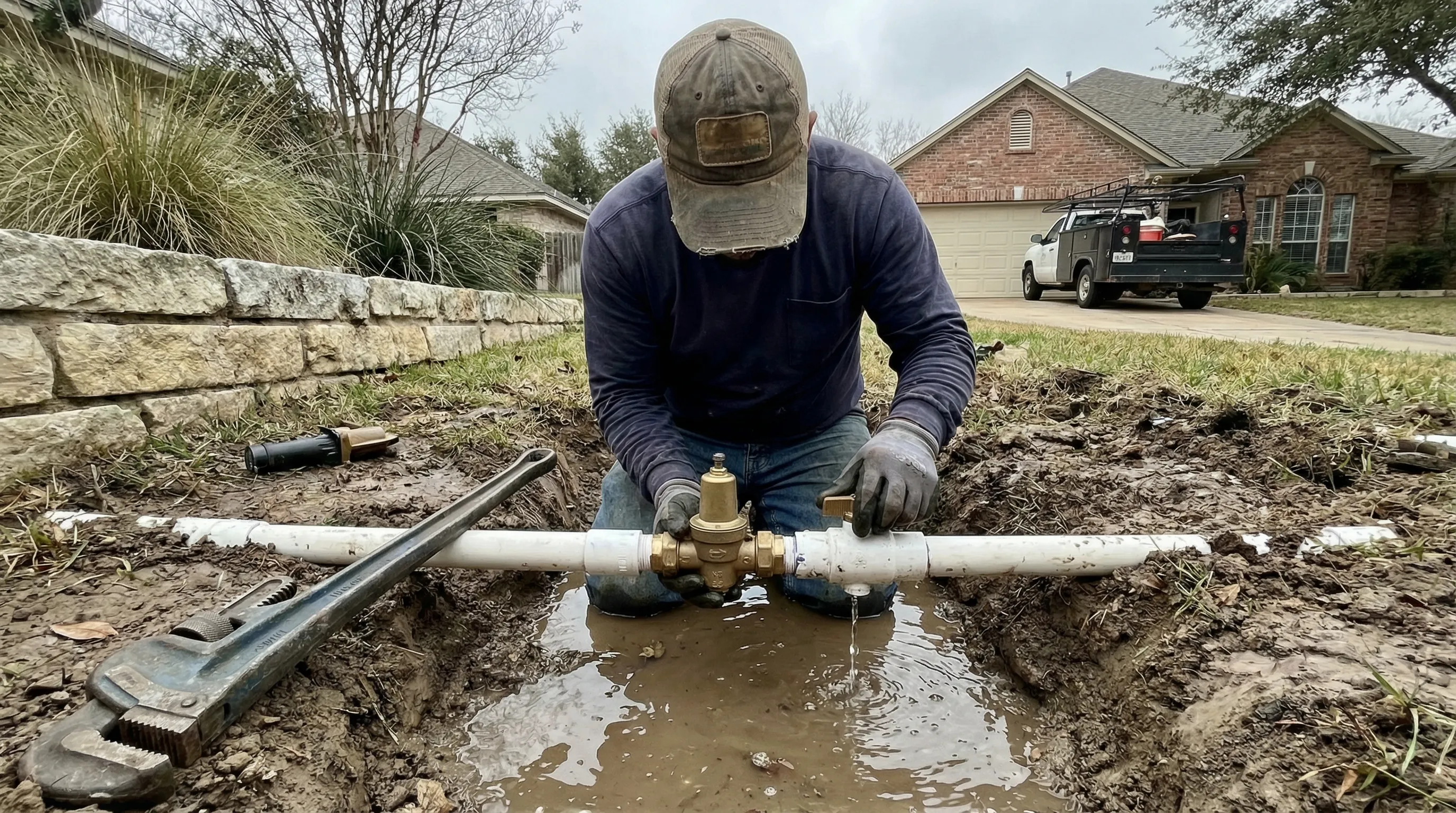
Serving Cedar Park? See our Cedar Park service area and Irrigation Installation & Repair.
Cedar Park irrigation problems we see most often
- Overspray onto sidewalks and driveways (wasted water)
- Beds watered like turf (plants stressed, weeds thrive)
- Pressure issues causing misting or poor coverage
- Slow leaks that show up as soggy spots or high bills
If you’re also converting turf, pair this with:
Fast diagnosis checklist
| What you notice | What it usually means |
|---|---|
| Mushy spots that never dry | A leak in the lateral line, a head seal failure, or a valve that isn’t closing fully. |
| Bubbling at head bases | A cracked riser/head body or a loose connection below grade. |
| Valve boxes that stay wet | Slow valve leaks (easy to miss until the bill jumps). |
| Fog/mist in the air during a zone run | Pressure too high or wrong nozzles—watering turns into drift. |
| Water hitting concrete and fences | Arcs/nozzles aren’t tuned (or wrong head type for the zone). |
| Dry patches next to soaked patches | Coverage gaps, clogged nozzles, pressure issues, or poor head spacing. |
Drip vs sprinklers: the simple rule
- Beds and shrubs: drip (targeted, less evaporation)
- Turf: rotors/sprays (but on separate zones and schedules)
Smart controllers: what to expect
Smart controllers help reduce waste through better scheduling, but only after zone design and pressure are correct.
For water-efficiency guidance and labeled products, see EPA WaterSense.
Pressure regulation: the hidden ROI
If you see misting, you’re often paying to water the air. Ask how the pro is regulating pressure and selecting heads/nozzles.
Starter packages (easy wins in Cedar Park)
| Package | What’s included | Best for |
|---|---|---|
| Tune-Up + Efficiency Check | Adjust arcs/nozzles, minor head fixes, basic leak check | Systems that “work” but waste water. |
| Drip Bed Conversion | Convert beds from spray to drip + zone split | Wet concrete + stressed plants. |
| Controller Upgrade + Programming | Smart controller + seasonal schedule | Homeowners who want less waste with less effort. |
| Efficiency Overhaul | Pressure regulation + zone corrections + controller | Chronic misting/uneven coverage. |
Quote checklist (Cedar Park edition)
- Are zones split by sun exposure and plant type?
- Do they specify pressure regulation and head/nozzle types?
- Is seasonal programming included (not just “we set it up”)?
- Are repairs itemized (heads, valves, drip, controller)?
- Do they explain establishment watering vs long-term watering?
Establishment watering vs long-term watering (what good programming includes)
If you’re planting new beds or converting to xeriscape, your irrigation needs two modes:
- Establishment mode: more consistent moisture for the first season
- Long-term mode: deeper, less frequent watering that builds resilient roots
Ask your contractor to define when they expect to switch modes and what the schedule changes look like.
Cycle/soak (how to reduce runoff)
If water runs off before it soaks in, shorter cycles with soak time are often the fix. A good tune-up should include cycle/soak where appropriate.
HOA-friendly irrigation upgrades (avoid overspray and puddles)
If an HOA is watching curb appeal, overspray onto sidewalks and algae/mildew on hardscape looks bad fast. Pressure regulation, proper arcs, and drip in beds reduce those issues.
Maintenance checklist (10-minute monthly walkthrough)
- Run each zone and look for misting
- Check for clogged drip emitters (especially after mulch refresh)
- Re-check arcs after mowing and edging
- Spot soggy areas that suggest slow leaks
Common mistakes to avoid (Cedar Park edition)
- Beds watered like turf. Drip zones and turf zones should be separate.
- No pressure regulation. Misting wastes water and leaves dry spots.
- Skipping programming. A smart controller still needs proper setup and seasonal schedules.
Quick FAQ
What’s the best first step if the system “works” but wastes water?
A tune-up plus pressure and coverage evaluation. Many systems just need correct nozzles, arcs, and zone scheduling.
Seasonal schedule example (what “programming” should look like)
Ask for seasonal schedules that change, not a single “set it and forget it” program:
| Season | Typical intent | What changes |
|---|---|---|
| Summer | Keep plants alive efficiently | Deeper cycles, zones split by sun exposure, avoid midday watering. |
| Spring/Fall | Maintain health with less waste | Reduced runtime and frequency as temps drop. |
| Winter | Minimal watering for established beds | Short runs only when dry spells persist. |
DIY checks before you pay for a service call
- Run each zone and watch for misting and overspray
- Check for soggy spots that suggest slow leaks
- Look in valve boxes for standing water
- Confirm the controller battery/backups and current date/time (bad settings cause chaos)
Repair vs upgrade: how to decide where money actually helps
- If multiple zones mist and overspray, prioritize pressure regulation + nozzle/head selection.
- If beds are watered like turf, prioritize drip conversion + zone split.
- If schedules never change or are confusing, a controller upgrade + proper programming often saves water quickly.
Ask for recommendations that tie directly to a symptom (waste, dry spots, puddling), not just “new parts.”
What a good irrigation pro does on-site
- Walks the property and maps zones by sun exposure and plant type
- Checks pressure and coverage (not just “it sprays”)
- Adjusts arcs and nozzles to avoid watering concrete
- Leaves you with a seasonal schedule plan (not one static program)
Common mistakes to avoid (Cedar Park irrigation)
- Running summer schedules deep into fall (overwatering)
- Turning up runtimes instead of fixing coverage
- Mixing bed watering and turf watering on the same zone
If you’re replacing turf or building a phased low-water plan, pair this with the Cedar Park sustainable landscaping guide and the 2025 xeriscaping cost guide so irrigation and planting scope stay aligned.
Start your Cedar Park irrigation fix
If you want irrigation that uses less water and keeps plants healthier, we can connect you with specialists who design zones properly and tune systems for efficiency.
Ready for next steps?
Tell us what you’re planning and we’ll match you with vetted local pros who can quote the work and explain the tradeoffs for your property.