
Insights
Irrigation Installation & Repair in Georgetown, TX (2025 Guide)
Published September 26, 2025
Quick Summary
- Who this is for: Georgetown homeowners dealing with clay-soil runoff, puddling, misting, or beds watered like turf.
- Outcome: A cycle/soak + drip-first approach that reduces runoff and keeps roots healthier on clay.
- Cost/Timeline: Many repairs run $150–$900; drip conversion and efficiency upgrades commonly land in $800–$3,500+ depending on zones and pressure issues.
How much does irrigation installation and repair cost in Georgetown, TX?
In Georgetown, most irrigation repairs run $150–$900, while drip conversion for beds typically costs $800–$3,500. On clay soil, long runtimes often create runoff and root rot, so many homes benefit from a $2,000–$10,000+ efficiency overhaul (cycle/soak, pressure regulation, and zone corrections).
| Scope | Typical Range | Notes |
|---|---|---|
| Minor repair (head, small leak) | $150 – $500 | Parts + diagnostics drive range. |
| Tune-up + troubleshooting | $250 – $900 | Great for runoff and uneven coverage. |
| Drip conversion for beds | $800 – $3,500 | High ROI for planting beds. |
| Smart controller upgrade | $250 – $1,200 | Hardware + install/programming. |
| Partial overhaul | $2,000 – $10,000 | Multiple zones, valves, pressure issues. |
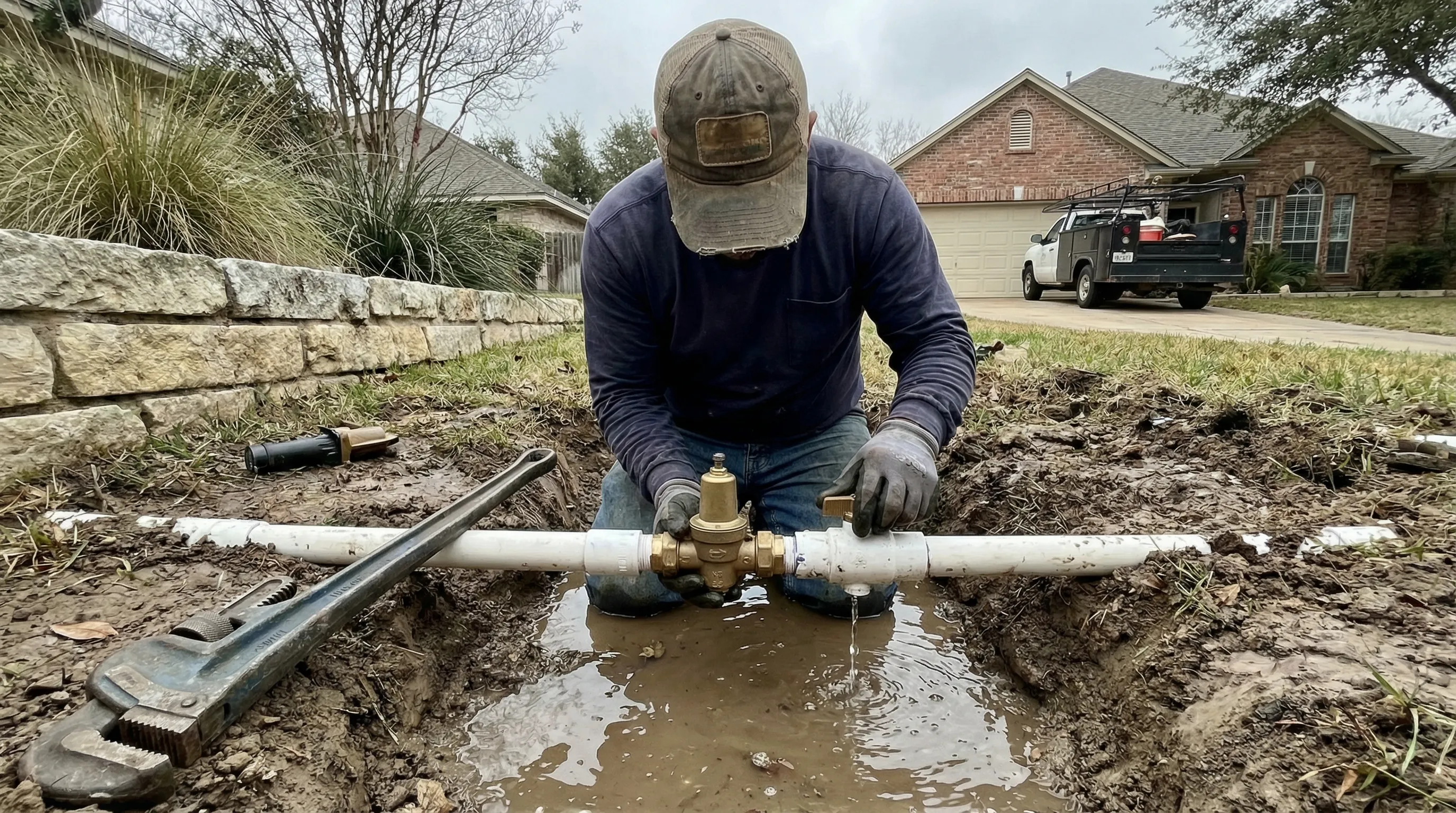
Serving Georgetown? See our Georgetown service area and Irrigation Installation & Repair.
Georgetown irrigation on clay: don’t drown your plants
Clay soils hold moisture longer. Common failures:
- Beds watered like turf (roots stay too wet)
- Runoff because watering cycles are too long
- Overspray onto hardscape (wasted water)
Pair this with:
Fast diagnosis checklist
| What you notice | What it usually means |
|---|---|
| Persistent wet spots | A leak in the line, a bad head seal, or a valve that isn’t closing fully. |
| Bubbling at head bases | A cracked riser/head body or a loose connection below grade. |
| Valve boxes that stay wet | Slow valve leaks (often shows up as higher bills over time). |
| Fog/mist during zone runs | Pressure too high or nozzle mismatch—watering turns into drift. |
| Overspray onto concrete | Arcs/nozzles aren’t tuned, or the zone has the wrong head type. |
| Uneven coverage (dry next to soaked) | Coverage gaps, clogs, pressure issues, or poor head spacing. |
Drip vs sprinklers (what should go where?)
- Beds and shrubs: drip irrigation
- Turf: rotors/sprays on dedicated zones
If you’re reducing turf, convert beds first and shrink turf zones later.
Pressure regulation and “cycle/soak” scheduling
Two concepts drive efficiency on clay:
- Pressure regulation (reduces misting and overspray)
- Cycle/soak (shorter cycles with soak time reduce runoff)
Ask your contractor to explain their approach in plain language.
Smart controllers: what to expect
Smart controllers help reduce waste when zones and pressure are already correct.
Reference: EPA WaterSense
Starter packages (common Georgetown solutions)
| Package | What’s included | Best for |
|---|---|---|
| Tune-Up + Efficiency Check | Adjust arcs/nozzles, minor head fixes, leak check | Runoff and uneven coverage. |
| Drip Bed Conversion | Convert beds from spray to drip + zone split | Wet concrete and stressed beds. |
| Controller Upgrade + Programming | Smart controller + seasonal schedule | Better efficiency with less effort. |
| Efficiency Overhaul | Pressure regulation + zone corrections + controller | Chronic runoff and misting. |
Quote checklist (Georgetown edition)
- Are zones split by sun exposure and plant type?
- Do they specify pressure regulation and head/nozzle types?
- Is cycle/soak scheduling included where needed?
- Are repairs itemized (heads, valves, drip, controller)?
- Do they explain establishment watering vs long-term watering?
Establishment watering vs long-term watering (clay soil matters)
On clay, the fastest way to damage plants is watering too frequently. Ask your irrigation pro to define:
- Establishment plan (first season) by zone and plant type
- Long-term plan with fewer, deeper cycles
- How they’ll adjust schedules seasonally
Cycle/soak: your runoff prevention tool
Cycle/soak means watering in shorter bursts with soak time between cycles. It reduces runoff and improves infiltration—especially useful on clay and mild slopes.
Maintenance checklist (so leaks and waste don’t hide)
- Run each zone monthly in summer and watch for misting
- Check valve boxes for standing water (slow leak signal)
- Re-check arcs after mowing and edging (heads get bumped)
- Replace clogged drip emitters instead of “turning the zone up”
Common mistakes to avoid (Georgetown edition)
- Beds watered like turf. Beds need drip and different cycles than lawns.
- Overwatering on clay. Too-frequent cycles keep roots too wet.
- Skipping pressure regulation. Misting wastes water and reduces coverage.
Quick FAQ
What’s the highest ROI irrigation upgrade in Georgetown?
Bed drip conversion plus pressure regulation and cycle/soak scheduling. It typically reduces runoff and protects plants.
Seasonal schedule framework (clay soil needs restraint)
Good programming changes with the season and uses cycle/soak where needed:
| Season | Typical intent | Notes |
|---|---|---|
| Summer | Deep watering without runoff | Shorter cycles with soak time can outperform long runs on clay. |
| Spring/Fall | Reduce runtime as temps drop | Many systems stay overwatered after summer. |
| Winter | Minimal watering for established beds | Water only during extended dry spells. |
DIY checks before paying for a service call
- Run each zone and watch for misting/overspray
- Check valve boxes for standing water (slow leak)
- Look for puddling that suggests cycle/soak is needed
- Verify the controller date/time and schedule accuracy
Repair vs upgrade (what usually pays off on clay)
- If you see runoff and puddling, ask about cycle/soak and zone runtimes before adding more heads.
- If beds are watered like turf, prioritize drip conversion and separate schedules.
- If misting is present, prioritize pressure regulation and nozzle selection.
What a good irrigation pro does on-site
- Walks the yard and identifies low spots and runoff paths
- Tunes arcs/nozzles to avoid watering hardscape
- Programs seasonal schedules and explains how to adjust for weather
Common mistakes to avoid (Georgetown irrigation)
- Overwatering because clay “looks dry” on the surface
- Keeping the same schedule year-round
- Turning up runtimes instead of fixing coverage and pressure
- Ignoring shade zones (they typically need less water than full sun zones) Clay makes overwatering easy to do and hard to see until plants decline.
If you’re also rebuilding beds or reducing turf, pairing this with the Georgetown sustainable landscaping guide and the 2025 xeriscaping cost guide helps keep irrigation and planting scope aligned.
Start your Georgetown irrigation fix
If you want irrigation that supports healthy plants without wasting water, we can connect you with specialists who design zones correctly and tune systems for efficiency.
Ready for next steps?
Tell us what you’re planning and we’ll match you with vetted local pros who can quote the work and explain the tradeoffs for your property.